by successfulbob | Lumix FZ 1000, Lumix G7, Lumix GH4, Lumix Lounge, photography, photography gear, video
Sarasota, Florida.
Two days.
Intense! But, fun!
We had the Lumix Luminary gathering over the last couple days where we get together and share ideas, techniques and new information about the Lumix cameras and their capabilities. They were long days but very productive. We broke into teams and created some videos together. Video not being my number one priority in my business I learned a lot. Saw quite a few ways to add some value for my stills clients through using video and some new ideas that were introduced.
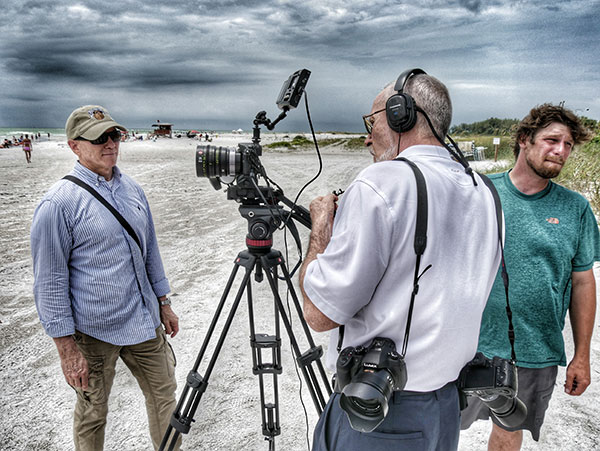
Here we are working on the beach. I’m getting the audio ready for the shoot and Armed with an FZ 1000 on one shoulder and a GH4 on the other. Image capture with the new Lumix G7 f8.0 200 ISO 1/640 sec It was shot by Dan using Tom’s G7 and 14-140 lens. He imported into his phone and messed with it using Snapseed. Added an HDR Scape layer and a Drama layer then used the Vertical Perspective under Transform and may have adjusted tone a bit..
(I’ll be sharing some work and features shortly from the G7. Pretty powerful camera!)
Sometimes as photographers running a one-man show our world can become a little insulated. Having an intense couple days with colleagues working and sharing ideas can be a great infusion of energy. Even if you can’t get together with a group like this I highly recommend at least getting together with a couple photographers and go out and shoot together for a couple hours. Then have a cup of coffee or an adult beverage or two. The relationships that you build doing things like this are wonderful!
Yours in Creative Photography, Bob
by successfulbob | architectural photography, commercial photography, Lumix GH4, photography, photography gear, photography lighting resources
Still working on photographing the Phoenix Airport Hilton after their eight million dollar refurbishing of the property.
It was great working with the staff while on the photo shoot. Everyone was as helpful as possible in getting the areas set for the photography. This makes the shooting day go better, smoother and leads to better photographs.
Sales manager Mike Manginelli was great in letting me know specifically what he was looking for. We were able to shoot to the IPad from the Lumix GH4 using the built in WIFI and Panasonic Image APP (free download) so he could see exactly what the camera saw as we worked out angles and ideas.
A bonus in operating and controlling the camera from the IPad (or IPhone or Android device) is when making multiple exposures to handle lighting situations with bracketing the camera is not touched. This allows for exact registration for blending various exposures using Adobe’s Photoshop Layers and Masks.
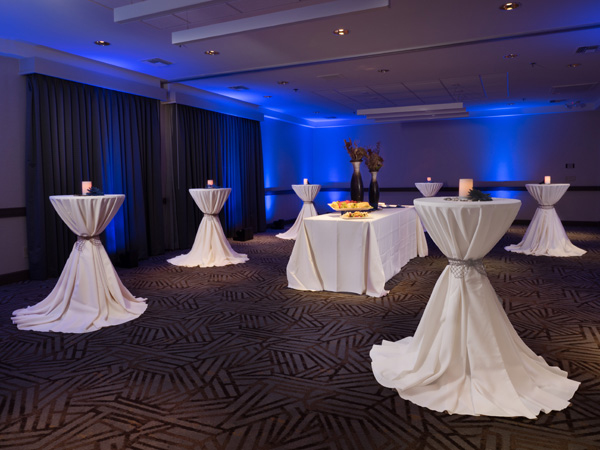
The Saguaro Room set for a reception.
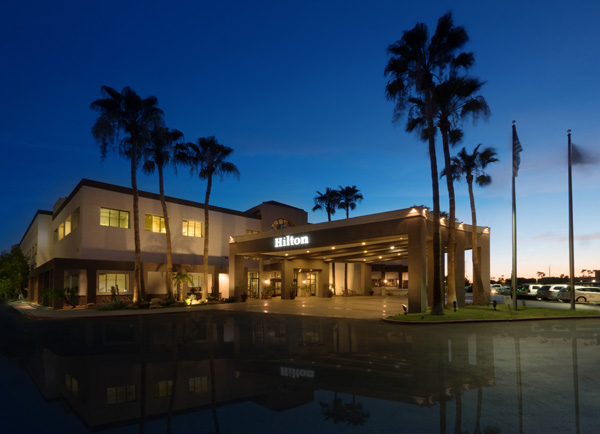
Exterior night image.
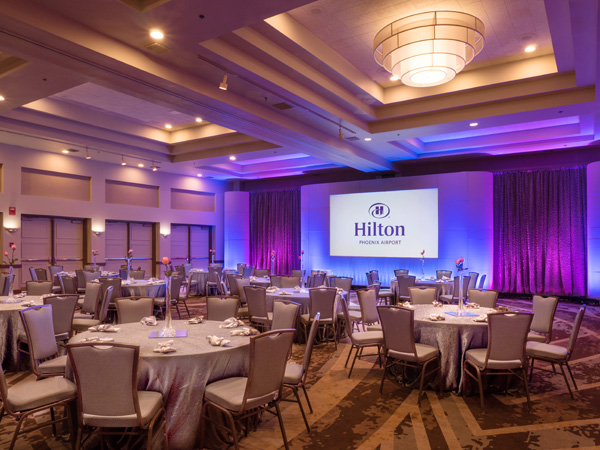
Ballroom set for meeting.
Another bonus to shooting from a remote system is being able to ‘paint the room’ with multiple pops of a flash and see the results as you go. These images are blended into the final scene adding light where necessary to fill shadows or creativity for esthetic reasons to add interest. I used a Paul C Buff light with a strip light box attached and a Vagabond battery pack to stay mobile. The Buff wireless triggers complete the remote set-up.
I’ve found the ability to ‘light my images’ with multiple exposures has made my shooting more efficient giving a better quality image to my clients. I spend more time in post production but my clients time is not wasted and I’m able to get the property rooms back online so there is little revenue loss when I photograph.
How do you work your interior and architectural shoots?
Yours in Creative Photography, Bob
by successfulbob | photography - art quote, photography education
Do you see yet?
Really see?
I believe we all go through stages when learning photography of learning to see as the camera sees. Most of us start out by making images that have some decent composition and maybe the occasional lucky lighting scenario and people tell us we should become professional. These are usually family and friends that don’t have a lot of visual and artistic background and that becomes the standard by which we judge ourselves.
Then we practice.
Study.
Learn.
Practice some more.
Learn more.
Realize that we aren’t really creating images that have depth and dimension and start our work in earnest in becoming the best professional photographers we can be. At least that’s the way it seems to be working for me. Artists through time have recognized that many people look, but not all people see…
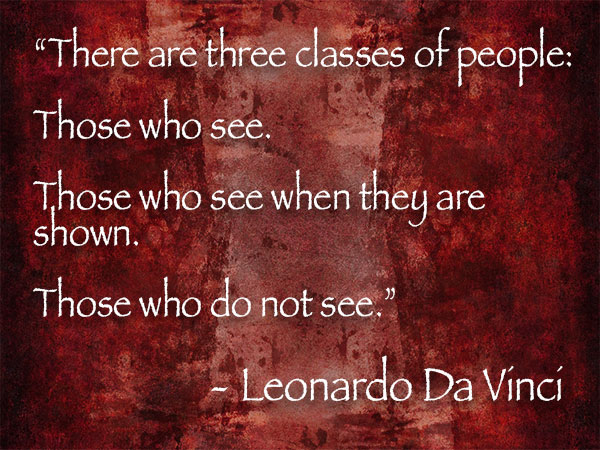
“There are three classes of people: Those who see. Those who see when they are shown. Those who do not see.” – Leonardo Da Vinci
There is something about finally learning to see that is quite exciting. Perhaps I’m a slow learner or as I think, it takes time and study to really see. I’m not even sure I’m there yet… I’m still studying, art and other artists as well as photography and other photographers. Here are a couple of bonus quotes from other photographers.
“The camera doesn’t make a bit of difference. All of them can record what you are seeing. But, you have to SEE,” – Ernst Haas
What do I see? How do I use the camera to communicate the feeling I have about what I see? – Jim Graham
And, once we have learned to see, can we translate that into an image that others can see?
I’m still searching. How about you?
Yours in Creative Photography, Bob
PS – here’s one of my favorite Ernst Haas photographs
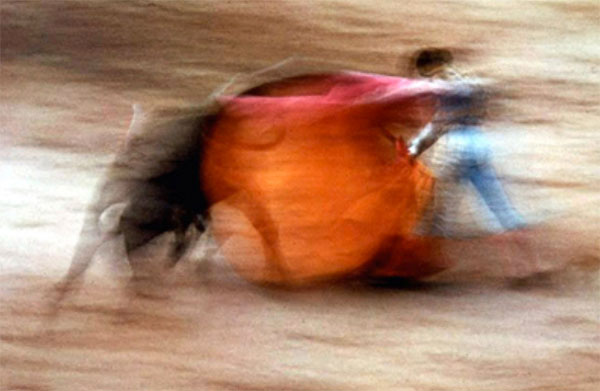
Bullfight captured by Ernst Haas
by successfulbob | fine art musician portrait, Lumix GH4, Lumix Lounge, musician photography, people photography, photography
New addition for the Sound Bites Grill ‘Wall of Fame’ in today’s post.
These musicians all reside on the Wall individually but they assembled into a great jazz/pop group and are playing Sunday nights at SBG. I saw them last week with my wife Holly and stayed until the last song was played. Eric Miller is a songwriter/singer/guitarist and is one of our favorite local artists. Eddie Barrattini bangs on the drums. Troy Perkins plays excellent bass on a guitar that he built himself.
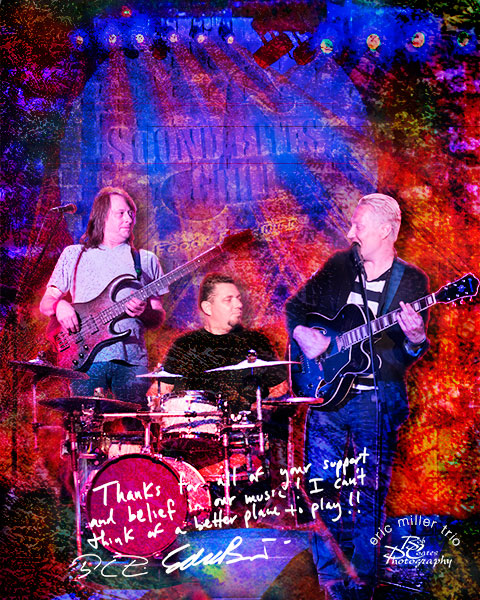
From left Troy Perkins, Eddie Barattini and Eric Miller
It’s pretty amazing the musical talent we have living and performing here in Sedona!
Images were captures with the * Lumix GH4 and the 35-70mm f2.8 Lumix Vario lens. The GH4 has enough density range to capture detail in the shadows yet still have enough information in the highlights that are created with LED stage lighting. The tough part about photographing LED lighting is that the colors are very pure and don’t have a large spectrum of color as when we photographed tungsten lighting with gels over them.
The individuals were isolated by selecting and Masking in Photoshop. The individual Layers were then blended together with multiple texture images to create the final art in a process I call Photo-Synthesis.
Yours in Creative Photography, Bob
* There’s been a $200 price drop on the GH4!
by successfulbob | imaging competition, photography, photography competition, photography education
I believe I am the photographer I am today because of imaging competition.
It has pushed me to make better photos.
It has pushed me to increase my skills.
It has given me material to be visible in my community because of success and awards and degrees that turned into press releases.
Most of all… it has given me confidence!
I highly recommend getting into imaging competition if you are not already there. You can watch how it works and learn what the judges are looking for by watching the live streaming coming your way in early August. In addition watch for Booray Perry, Cr.Photog., CPP for a peek behind the scenes and interviews. The streaming is available for members of Professional Photographers of America (PPA) as one of many benefits…

Stream.the IPC.org
The rest of the details are available on the PPA web site. Dates, times, instructions, etc… here.
I’ll be one of the jurors and look forward to seeing all of the images members have put forth this year for feedback. Remember this ‘competition’ is with yourself. Images are judged against a standard (see the Twelve Elements below) and not against each other… Until it’s time for the Grand Imaging Awards and the International Photo Cup.
Yours in Creative Photography, Bob
The Twelve Elements
1.) Impact is the sense one gets upon viewing an image for the first time. Compelling images evoke laughter, sadness, anger, pride, wonder or another intense emotion. There can be impact in any of these twelve elements.
2.) Technical excellence is the print quality of the image itself as it is presented for viewing. Retouching, manipulation, sharpness, exposure, printing, mounting, and correct color are some items that speak to the qualities of the physical print.
3.) Creativity is the original, fresh, and external expression of the imagination of the maker by using the medium to convey an idea, message or thought.
4.) Style is defined in a number of ways as it applies to a creative image. It might be defined by a specific genre or simply be recognizable as the characteristics of how a specific artist applies light to a subject. It can impact an image in a positive manner when the subject matter and the style are appropriate for each other, or it can have a negative effect when they are at odds.
5.) Composition is important to the design of an image, bringing all of the visual elements together in concert to express the purpose of the image. Proper composition holds the viewer in the image and prompts the viewer to look where the creator intends. Effective composition can be pleasing or disturbing, depending on the intent of the image maker.
6.) Presentation affects an image by giving it a finished look. The mats and borders used, either physical or digital, should support and enhance the image, not distract from it.
7.) Color Balance supplies harmony to an image. An image in which the tones work together, effectively supporting the image, can enhance its emotional appeal. Color balance is not always harmonious and can be used to evoke diverse feelings for effect.
8.) Center of Interest is the point or points on the image where the maker wants the viewer to stop as they view the image. There can be primary and secondary centers of interest. Occasionally there will be no specific center of interest, when the entire scene collectively serves as the center of interest.
9.) Lighting —the use and control of light—refers to how dimension, shape and roundness are defined in an image. Whether the light applied to an image is man-made or natural, proper use of it should enhance an image.
10.) Subject Matter should always be appropriate to the story being told in an image.
11.) Technique is the approach used to create the image. Printing, lighting, posing, capture, presentation media, and more are part of the technique applied to an image.
12.) Story Telling refers to the image’s ability to evoke imagination. One beautiful thing about art is that each viewer might collect his own message or read her own story in an image.
by successfulbob | fine art photography, graphic design, photography education
I enjoy creating new images using my process dubbed Photo-Synthesis. I use multiple texture files, Adjustment Layers, Layer FX, Layer Masks and more…
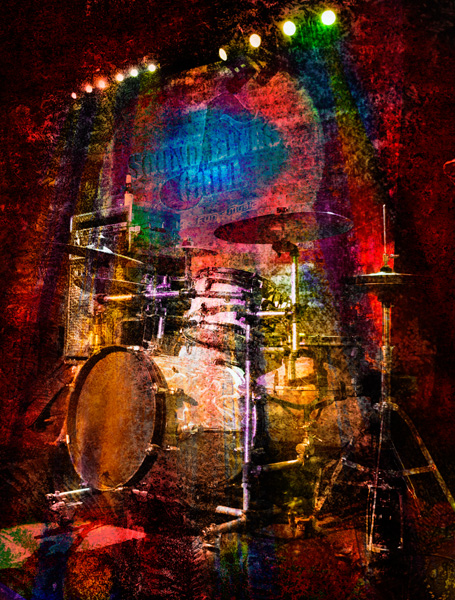
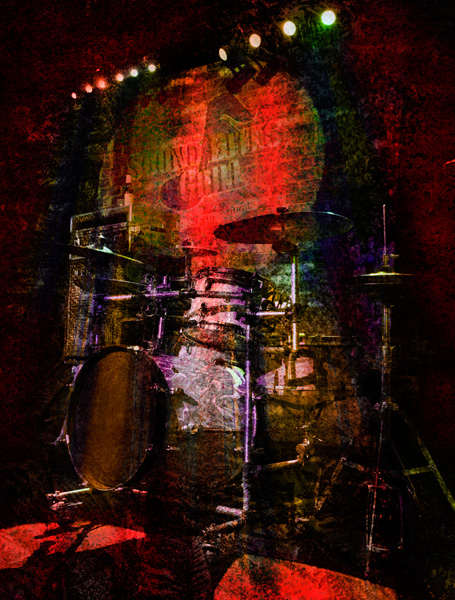
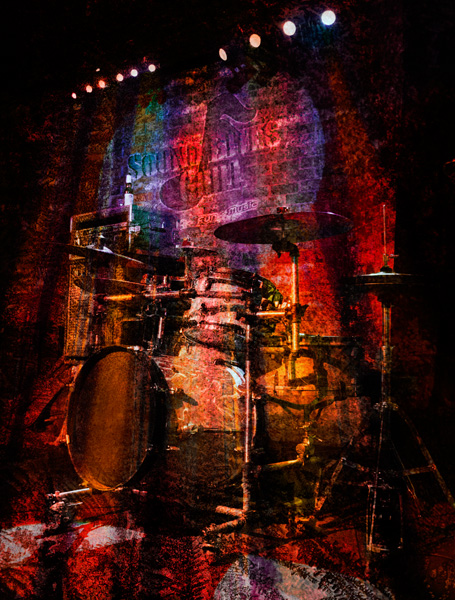
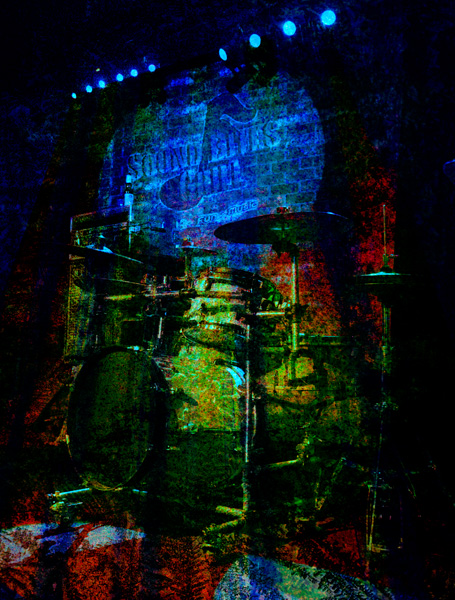
This is one of the classes I teach and as a Panasonic Lumix Luminarybased on Adobe Photoshop. If you have a photography group and would like to have a presentation made depending on the size of the group… Click on the link in the menu bar for a description of this or other programs I present.
Yours in Creative Photography, Bob
PS – the light rays were created with a photograph of rusty galvanized roofing material and Photoshop Blend Modes…