by successfulbob | architectural photography, black & white, graphic design, Lumix FZ 1000, Lumix Lounge, photography education
Wizard Academy in Austin Texas is a place of creative learning, whimsy and full of visual delight! I was there last week and enjoyed working and learning in this target rich environment!
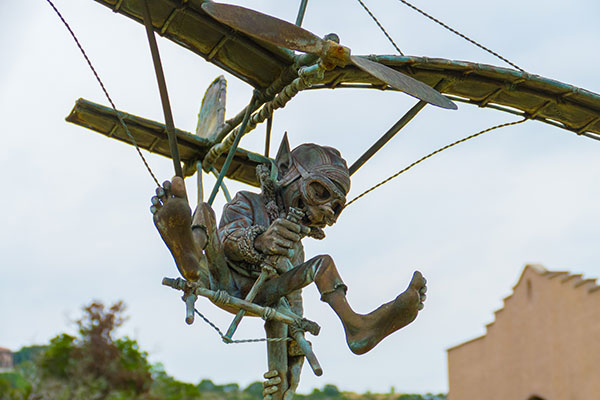
Detail from a metal sculpture near Engelbrecht House on the Wizard Academy campus.
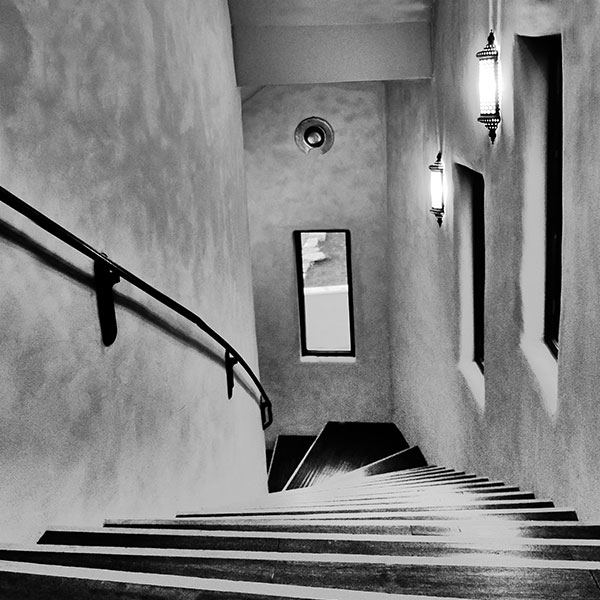
Spiral staircase from the Library down to the presentation room in the Tower at Wizard Academy
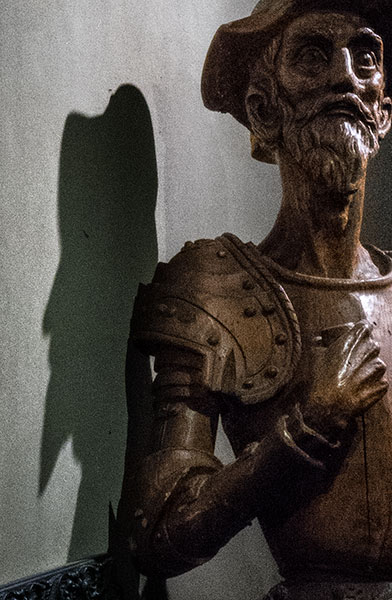
Detail from a Don Quixote carving in the lower art gallery in the Tower.
The Wizard Academy has an extensive collection of art devoted to the Don. Paintings, lithographs, metal and wood sculptures in all shapes sizes and mediums of which you might think. Think adventures, tilting at windmills and all that entails. It is definitely not a place for those who are traditional thinkers! It makes you stretch…
Images captured with the Lumix FZ 1000
by successfulbob | black & white, Lumix FZ 1000, Lumix Lounge, photography, photography education
I spent most of last week a Wizard Academy, a creative business learning environment, in Austin, Texas in Creativity Mode.
You ask, “What the heck is Creativity Mode Bob??”
Creativity Mode is any time when I can throw off the shackles of having to create a specific image for a specific reason. It allows lots of time for experimentation, play, trying new techniques with plenty of chances for failure of a concept with no negative consequences. And usually leads to pushing the boundaries of photography. In this case it was the ‘Photographers Roundtable’ led by Roy Williams and Daniel Whittington. 17 photographers gathered to be pushed to create interesting imagery. Challenges were issued to look harder for shadows, challenge composition rules with frameline magnatism, use color as a statement, push the use of portals and framing to new levels and more.
All of this taking place in a target rich environment with wonderful architecture, artwork everywhere designed to delight and surprise the visual senses. Good times.
Here’s one of the images created with the Lumix FZ 1000 with a tweaked creative filter program mode.
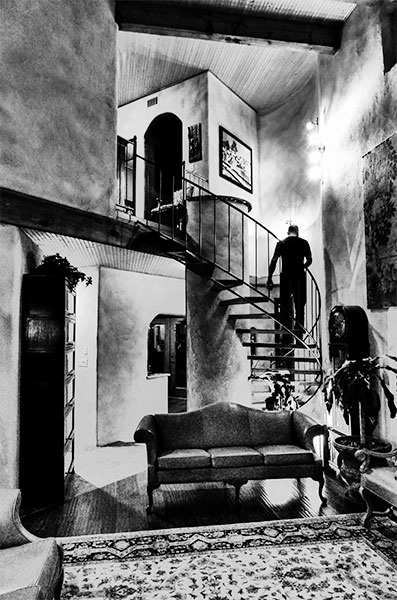
In Spence House the high ceiling and spiral staircase create wonderful lines.
This photograph was made using the Illustrative Art setting on the FZ 1000 (setting is available on most Lumix cameras). The nice part about the art settings is that you can tweak them in camera. In this case I changed the white balance to black and white. The monochrome allows the shapes, forms and glow to come to the forefront of the photo. 1/40 sec ISO 1600 f2.8
I’ll be sharing more images and ideas from spending mulitple days talking about pushing envelopes and experimenting with other photographers…
Yours in Creative Photography, Bob
PS – Talk about an all around camera the FZ 1000 is 25 to 400mm f2.8-4 all in one. Under 2.5 lbs. Captures 4K video and syncs to 1/4000 of a second with flash. The link here to Amazon has the camera (as of today prices go up and down a bit) for only $728
by successfulbob | photography - art quote, photography education
???????
Questions. Questions are a wonderful tool to enhance your photography skills.
Questions of yourself. How can I make this image better? What if I move the light over there? Add a flag here? Make shadows more apparent here? Wait. If I change the camera angle will it be stronger?
Questions for others. Hey! How did you do that?
Questions for viewers of your work. What do you think of this photograph?
Questions for viewing others work. Let’s see if I can figure out how the lighting on this was accomplished… Why do I like this?
“No man really becomes a fool until he stops asking questions.” Charles Proteus Steinmetz (inventor/engineer)
What questions are you going to ask today?
Yours in Creative Photography, Bob
by successfulbob | Lumix Lounge, photography education, photography seminar
One of the reasons I enjoy teaching and sharing so much is to see the results of others when trying the techniques.
Here is an article from the 3CT (Camera Club Council of Tennessee) It documents Sandy Miller’s use of Textures, Layers, blend Modes and Masks from a class I gave last month in Chattanooga.
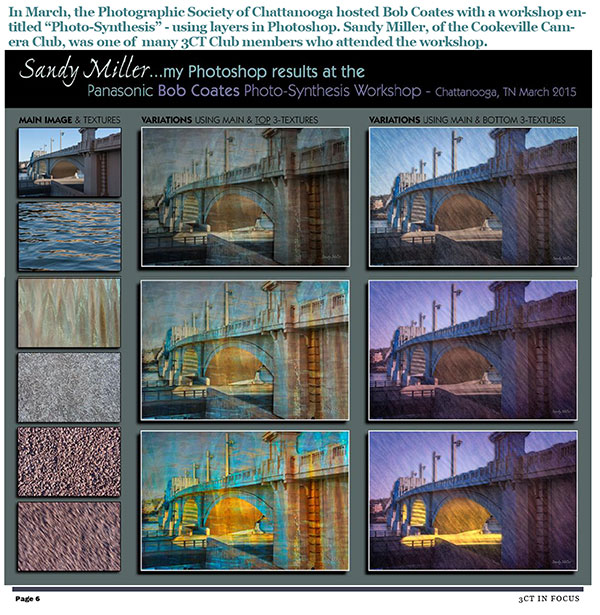
Art Market Street Bridge images ©Sandy Miller
Looks like Sandy has a great grasp of the concept and is sharing it well herself. All images including textures were photographed as part of our class project in about a half hour. Then we went to the classroom to put the images to work.
The class was hosted by the Photographic Society of Chattanooga with the very capable assistance of Bill Mueller and sponsored by the Lumix professional line of Panasonic Cameras.
Yours in Creative Photography, Bob
PS – If you are looking for a speaker for your group let me know. Presentation Program descriptions here
by successfulbob | photography - art quote, photography education
Great works of Art.
What do most of them have in common? I posit that Michelangelo has it nailed.
“Genius is eternal patience.” Michelangelo Buonarroti
The patience and perseverance to complete the task would be very high on the list. Even works of art that were completed in a very short period of time had in their basis a long time learning and practicing the skills necessary to make that happen. Think of the great photographers and artists that come to mind immediately. All devoted their lives or a major portion of it to learning, practice, perfecting, practicing some more. It’s apparent in the depth of their work.
An artist goes through stages of learning. A child attempting art often starts with stick figures and very rudimentary shapes. As growth and practice occur perspective is added. Shadows create more dimension. Color begins to play a part with mixing, under-painting and differing colors laid side by side to give unusual effects. Final touches of opaque paint give the illusion of highlights and deeper shadows.
A musician starts with basic notes. Chopsticks on the piano. A slightly more advanced simple song. Then scales to train the brain and fingers in motor memory. Study. More in-depth practice until it’s possible to play notes at a speed and clarity for advanced intricate pieces.
Just as the other artists go through their paces as photographers we need to ‘learn the scales’ and add perspective and depth to our work as we advance our craft. There seems to be a tendency to think we are pretty good at making images before we even understand what makes a great image. I know I went through this at various stages of my photography career thinking I was pretty good at this or that. Now when I begin to think I am good at some area of my photography I go out and find those that really are and aspire to learn more.
We can take bits and pieces from other arts to make us better photographers.
As the musician practices scales to create motor memory we can sit with our cameras and make changes to settings without looking at the camera. Confirm it’s the setting we were trying for and repeat until all the controls become automatic.
Learning the vocabulary of our profession is important. You can’t create what you can’t think about or visualize in your brain and you can’t do that without knowing words for all kinds of light, shadow and form.
I guess the long story short is how much are you willing to work, to make mistakes, to study, to practice, to play in order to be able to create better images?
How much patience do you have??
Yours in Creative Photography, Bob
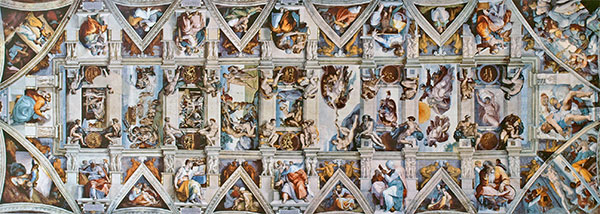
Мікеланджело; Michelangelo – власне фото (by Qypchak)
PS – Michelangelo made an appearance here last week in the Photo/Art Quote…. and that’s just coincidence.
by successfulbob | black & white, commercial photography, Lumix Lounge, musician photography, people photography, photography education
Pre-visualization Part 2.
And, the anatomy of post production of an image to meet the pre-visualization. That’s what we’re continuing talking about today. I saw this final image in my head before I even made the photo. (if I could only get there in time) Here’s the story…
Esteban is an extremely talented artist with the guitar. I have been fortunate to photograph him on numerous occasions. Last time out (see post here) I made images of him for marketing and promotion and I was gifted with seeing a lighting situation during a live performance that I knew would be wonderful in color. And, then especially in black and white. If only I could get to the right position, with the right lens, before the dynamics of the situation changed.
Moved quickly across the room while changing lenses. Dropped to the floor and fired off about 8 frames before he came out of the position and the lighting changed.
Here’s the Black and White version building upon the color version from yesterday followed by an Animated Gif showing the steps of post production…
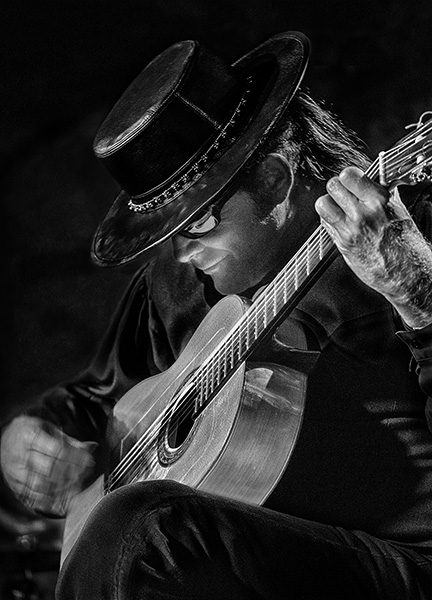
Esteban image after building on the color version.
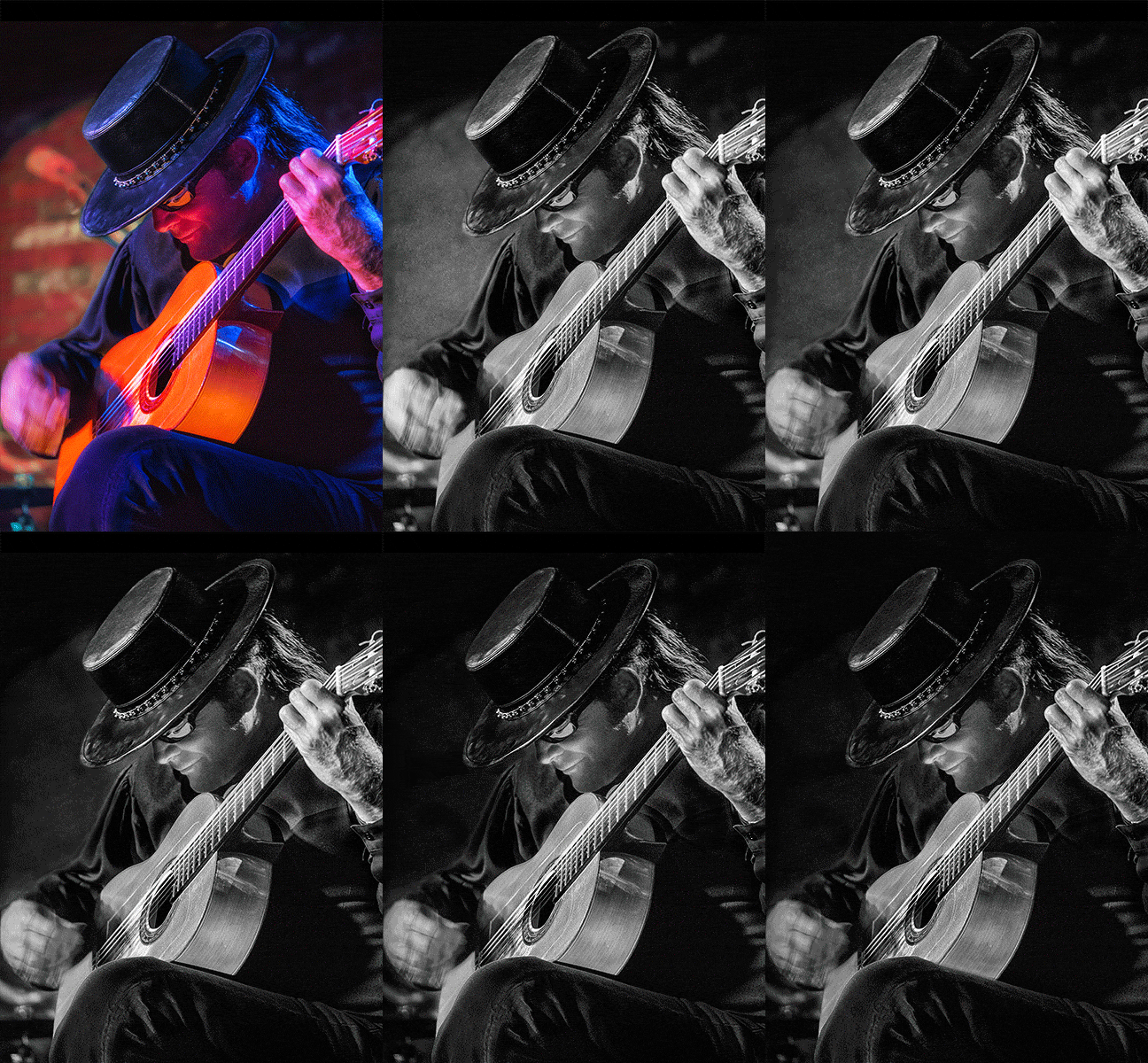
Color processed file. NIK Silver FX Pro 2 for BW conversion. Clean up background distraction. Add detail to hand from another capture. Tone down Background w/ Curves Layer. Duplicate Curves Layer. Add Soft Light Layer Painting with grey to burn down image. Copy of previous Layer. Remove distracting shadow from leg near guitar. Final Soft Light Layer for final burning adjustments.
Was there more in post? You betcha! Some things are very subtle like selective sharpening of certain places in the image to further guide the viewer around. They would be too subtle to show the differences in this Animated Gif.
Yours in Creative Photography, Bob
PS – Original image was captured with the Lumix GH4 with the 35-100mm f2.8 Vario Lens under stage lighting conditions during a live performance.
PPS – So which image do you like better? Color or Black and White??