Reaching out to other arts for quotes is a way to keep from becoming inbred in my thinking. If I were only to search for artistic inspiration from other photographers, I believe there would be a large hole in our education moving forward. Today’s quote is from Ralph Waldo Emerson who is best known, by me, as a poet. But he was also an essayist and lecturer focused on individuality and freedom.
I love the thought he expressed here.
“The earth laughs in flowers.” – Ralph Waldo Emerson
These five words make me think of the earth and flowers in such a different manner, You wouldn’t think that such a few number of words could open a huge number of thoughts within the brain. Maybe it doesn’t do it for you. Let me know. These words tickle my fancy and make me want to create images in a slightly different manner.
‘Iris’ – Accepted into the Professional Photographer of America Loan Collection in 2014
It’s wonderful to grab inspiration from many different places.
from where are you currently drawing your inspiration?
Due to a change in this year’s judging procedure, I can share my Loan Collection images from the International Photographic Competition (IPC) put on by Professional Photographers of America (PPA). The PPA Loan Collection is judged after a picture has earned a Merit, which is defined as an above average image by an above average photographer. Loan Collection images are considered among the ‘Best of the Best.’
And here we go. I’ll comment under each image for what I was trying to accomplish.
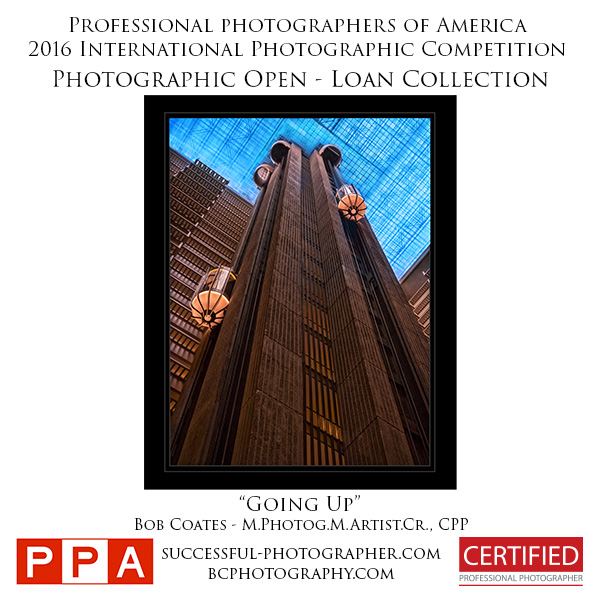
“Going Up” – A study in perspective. Trying to make an everyday object into an art piece. I do this in practice for my commercial and architectural clients.
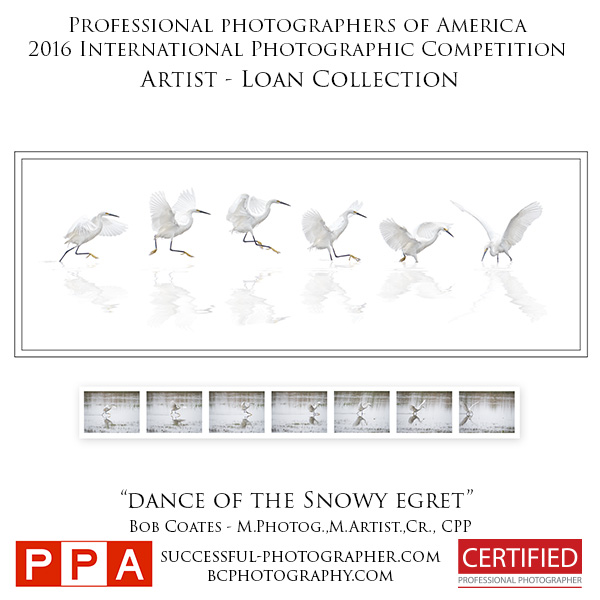
“Dance of the Snowy Egret” – This was me on vacation. I was studying this snowy egret tracking down its meals in the marsh. I noticed some patterns as I watched its behavior. This image began to form in my head. The Master Artist category is judged on the final output. Also, the difficulty and expertise in applying the techniques is a major part of whether an image is accepted.
“Shape Form Tone” – Made in Atlanta while I was a PPA headquarters for a meeting. We were on break, and I had brought a camera with me and saw this view out the window. Again, working on perfecting my craft by creating depth and dimension in my work.
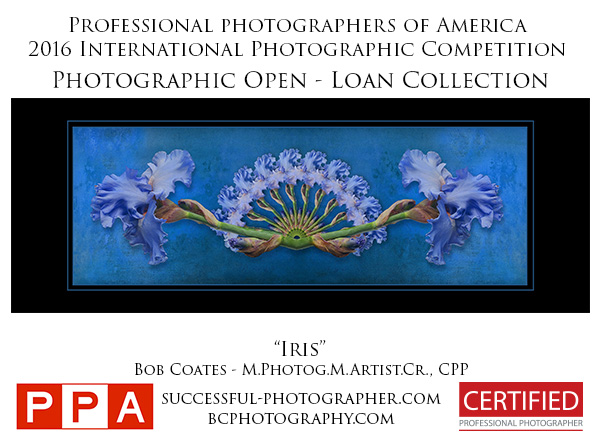
“Iris” – This was a design I created for a silk scarf. (my clothing designs are available at SHOP VIDA) Depth and dimension are critical to adding life to a two-dimensional surface. Shadows are essential in making that happen.
There you have it. My photographic and design work in the 2016 PPA Loan Collection as judged by Professional Photographers of America.
Like many photographers around the country, I have been watching the judging of the International Photographic Competition hosted by the Professional Photographers of America (PPA).
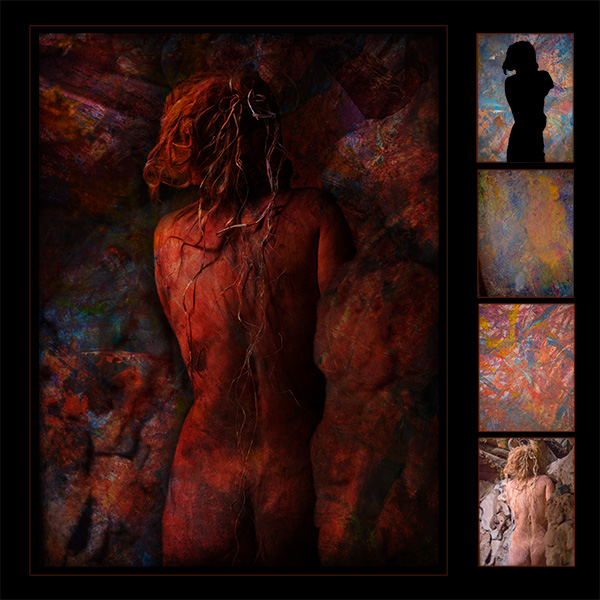
‘Hiding’ – General Collection Artist Category – This image of model and mask, performer, and artist Pash Gabalvy of Sedona was an effort to create a painterly feel to this capture. May have processed this one a bit too dark.
I submitted eight images. Four in the Photographic Open and four in the Artist category. Of the eight images presented, Three images were not accepted. One was accepted into the General Collection earning a Merit. Four were deemed to be ‘best of the best’ and accepted into the prestigious Loan Collection.
I can share the ‘less successful’ images that Merited or were not accepted, but not the Loan Collection images as there will be additional judging of those images for the Grand Imaging Awards which will be announced at the Imaging USA convention in San Antonio, TX in January.
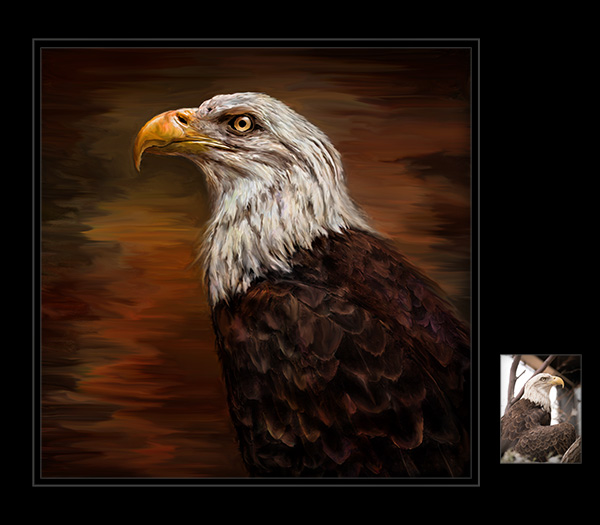
‘Eagle’ – Was not accepted. The Artist Category is judged based on the final image but also the difficulty and execution of the artwork itself. I will rework this image and try again.
Notice I did not say, ‘unsuccessful’ I said, ‘less than successful.’ We always want our images to score well, but I believe I learn just as much, if not more, from those that don’t. Why? I have been experimenting with lots of new capture techniques, new painting techniques in creating art from my images and different ways of processing photos. I get feedback on why the treatments and processing didn’t work, and I can grow my skills with that information.
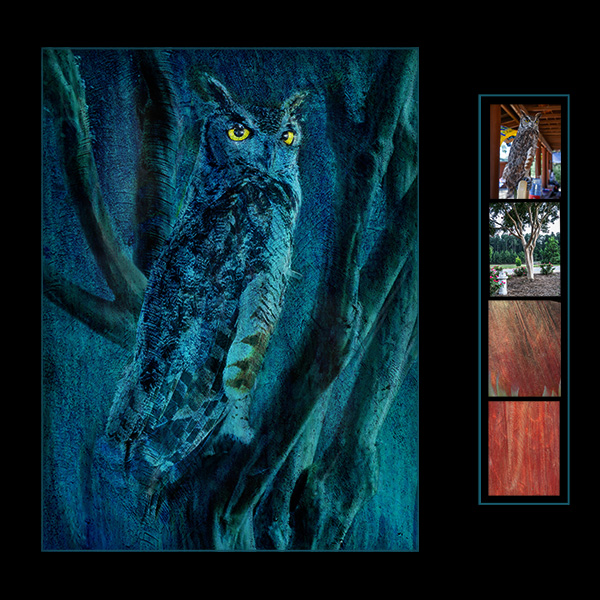
‘Nightwatch’ – Another Artist submission that fell short in the judge’s opinions. This was challenged, so I received feedback on what the judges found lacking. “No specular highlights on the beak. Some leaves the were a distraction behind the owl’s head. Not enough shape and form on the owl’s body.” I agree with all contentions and will be reworking this image again.
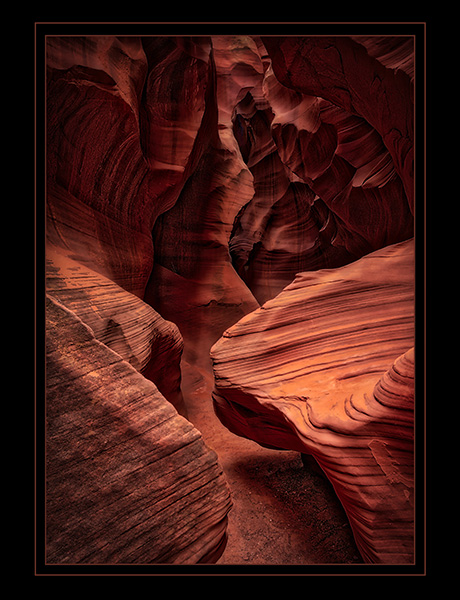
‘Secret Canyon’ – Not accepted n the Photographic Open Category
I did not receive feedback on this image yet. My guess is that it might be a little too artistic for the subject. Many pictures of slot canyons have been entered over the years.
That’s my story so far. I’ll follow up with the Loan Collection images after the GIA’s have been selected.
The Painter’s Keys. An excellent twice weekly newsletter was started by Canadian artist Robert Genn. Robert is no longer with us, but the bi-weekly letter and website were carried on by his daughter Sara who is a talented artist and writer in her own right.
Robert was not only a talented acrylic on canvas artist recognized throughout the world for his work depicting the west coast of Canada, but he was also a thinker on the process of creating art. That’s why I grabbed a quote from him for use this morning.
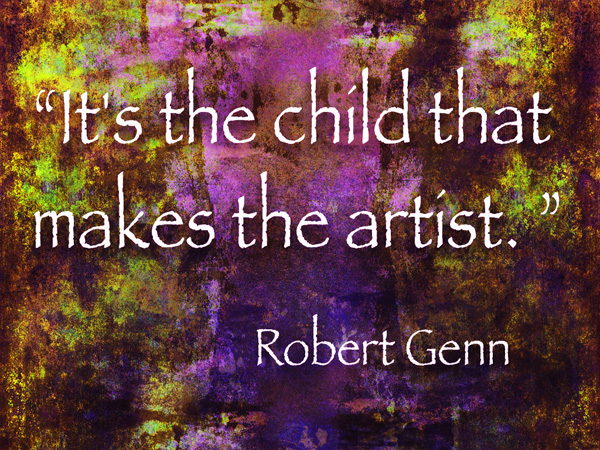
“It’s the child that makes the artist.” – Robert Genn
In my opinion, this quote is a very simple but important one. There is a tendency to loose our inner child as we grow up and into our careers. When we first try our hand at art as a child, we work with abandon and no thought of what is ‘right of wrong’ we just do. As we age, we begin to listen and be shaped by the outside world of parents and teachers and supposed friends who tell us what is wrong with our work. How we can’t make a living as artists. How we could do something better if we just did it the approved way.
To grow as artists, I suggest that we go back to that inner child now and then and just play with wild abandon. Try something new. Push boundaries. Don’t label something as good or bad but as a learning experience. I talk about this many times, but it’s a message that will help you forge new art in your life. Don’t be afraid to make mistakes. Don’t listen to people that tell your work is not up to par it doesn’t matter. Play. Play some more. Study new ideas and try to put them into practice.
From Sara Genn’s Latest Letter/Post – “Your Brain on Art’
Scientists ‘read dreams’ using brain scans. Rebecca Morelle, BBC science
Will this result in masterpieces immediately? Many times no. But often it can lead you down a new path to help you become a more creative individual. Picasso had a quote along similar lines, “Every child is an artist. The problem is how to remain an artist once we grow up.” – Pablo Picasso
Don’t let the world take out your inner child.
Yours in Creative Photography, Bob
PS – You can click on either link in this post to check out and subscribe to the Painter’s Keys
“Bob, your images show your expertise and I absolutely agree with all you say. I will add one thought. The images you show in your article are for the Artist category. My thought is those entering for the first time might mostly be in the Photographic category. So maybe you can add some of your beginning ones that merited rather than your most recent advanced ones for perspective.
Some of my own frustration does lie in that critiques in the Photographic category often talk about changing backgrounds, etc. To me that should be in the Artistic competition since that is not “photographic”, but I understand there is not a way to monitor this, so anything goes in Photographic pretty much.
I think it is important to explain to entrants that even if your image scores a 74 let’s say, this is based on a professional standard and is “average among your peers” so it is not “average for anyone with a camera.” So there should not be fear to enter because you might not be good enough. My thought is this, if I thought I was not good enough, I certainly would want to know that and learn. I would not be charging clients money for my work if even I thought I was not good enough. On another note even a score below competition standard of 65 might be a sellable client image in some instances, it just misses too many marks of the 12 elements for merit.”
——————————
Joanne Fabian
Photographer/Owner
J Gray Fabian Photography
Souderton PA
Excellent thoughts from Joanne. I will pass on the idea about critiques and backgrounds to other PPA Jurors in the Photographic Open category. We are always trying to improve the experience of judging and providing feedback to members. (I am a PPA Approved Juror)
The images that I shared in the original post were ones that I had quick access to and wanted to illustrate the post. I took some time to dig back in through some older files for examples in the Photographic Open category that merited and some that made it to the Loan Collection and below a video of many of my entries over the years.
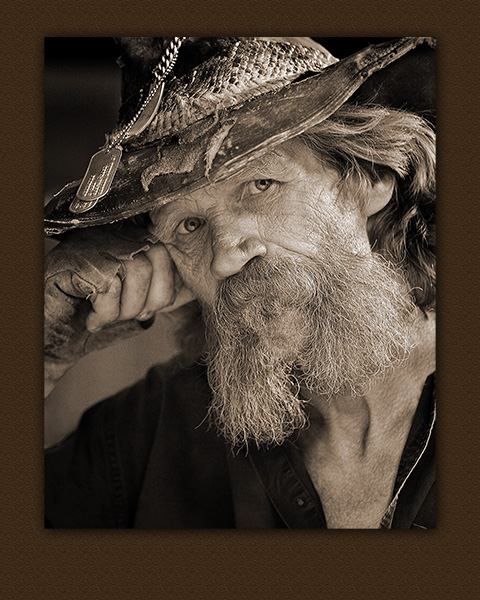
‘Randy’ – General Merit & Showcase Book 2006
‘Enduring Comfort’ – General Merit 2009
‘Variations on a Theme’ – Loan Collection 2006
‘135 Painted Cliffs’ – Loan Collection 2007
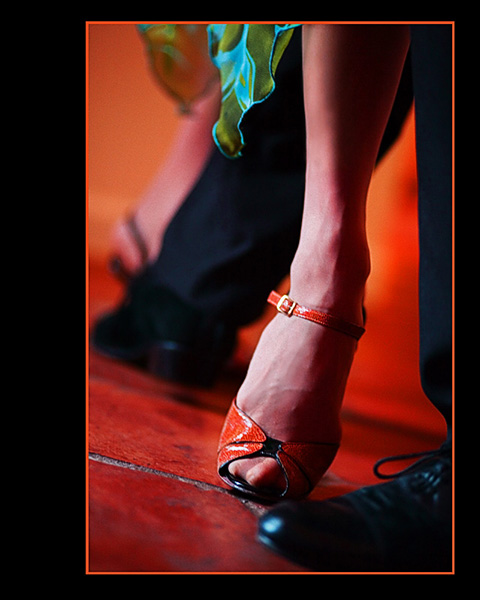
‘Tango Toes’ – General Merit 2007
I tend toward more of a commercial and fine art imagery in my business so these may be a little more ‘arty’ than other people’s entries. I’ll share a video showing most of my submissions from 2005 through 2015. Not all images made it to the merit category, but it will give you a good idea of my body of work over the years.
Bob Coates Photography IPC entries 2005-2015 (3:14)
Again I highly encourage everyone interested in improving their photography in an accelerated manner to participate in International Photographic Competition. Even if you did not enter this year spend some time streaming the IPC starting on Sunday, July 31 and continuing thru Wednesday, August 4th.
Questions, comments and other points of view always welcome.
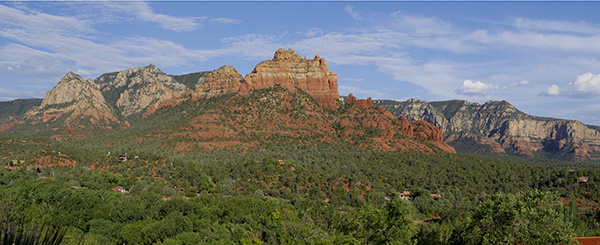
Playing with my Lumix GX8 in panorama mode is a fun time. Being able to have a panoramic image of the scene in front of you stitched in-camera can be a great help. Sometimes these are all I need. Sometimes there can be a bit of a ‘hitch-in-the-giddyup’. Let’s look at the good, the bad, and the sometimes ugly and how to make the best use of all of them.
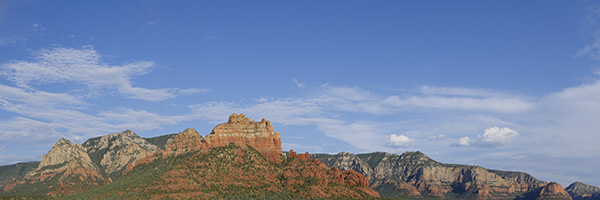
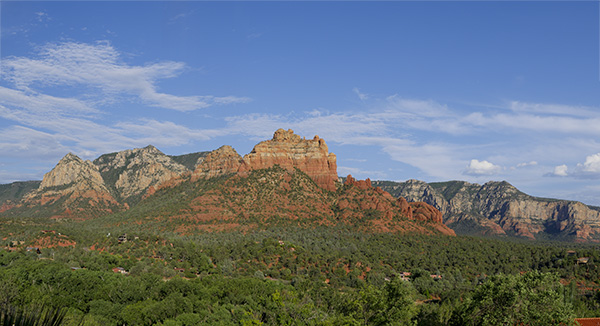
Sedona, Arizona red rocks – All panoramas were captured with Lumix GX8 in panorama mode
Here’s the same view with a different amount of foreground
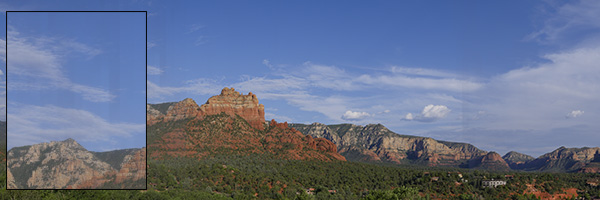
Sometimes a panorama gives you the field of view you are looking for, but its height is just not quite right. Then it’s time to do another row and stitch them together in post-production.
When making in-camera panoramics proper technique is imperative. I learned an old videographer’s trick that makes for better captures. Point your feet where you would like the panorama to end. Place the camera against your forehead and lock elbows down to the side. Use your stomach muscles to rotate the lens to the start of the pano. Press the shutter and use the stomach muscles to turn to the end of the image. With in-camera images, I recommend going past where you wold like the final part of the picture to finish because the image will cut off a little before it appears to in the viewfinder. There’s a ‘Goldilocks’ speed for the rotation. You don’t want to go too fast or too slow. You want to move ‘just right’ to help the camera give you a good image. If it is radically wrong, the camera will notify you that it can’t process the image because of processing errors.
Poor technique led to lines captured in the image. It’s important to play your panorama back to ensure you’ve achieved a good result. It can sometimes show OK with a quick glance. I will often shoot the scene a couple of times to make sure I’ve got a good clean result.
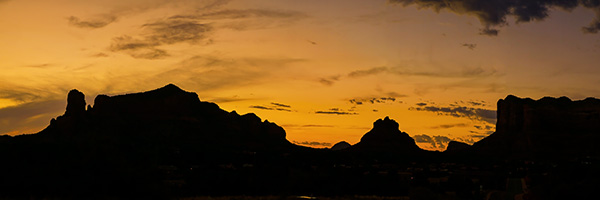
Panorama in silhouette. I saw this scene developing in the distance and stopped the car the first chance I could. I used MacPhun’s Intensify plugin* for Mac to help bring the scene back to what had attracted me to make the image. By the time I was able to pull over the sky had started to lose its color. The software brought back the sky as it was moments before.
We have incredible tools at our disposal in the photographic world. I enjoy learning how to push them to the next level.
How about you?
Yours in creative Photography, Bob
* Special deal on MacPhun’s Intensify and Uplet (a software for uploading images to Instagram from your computer)
For infrared conversion of my cameras I use LifePixel. Infrared allows you to put an older camera to use and opens up a new time time of day for productive image creation.
Learn Photoshop in a fun environment. Aaron Nace applies the right amount of fun with easy to understand and follow tutorials. Actions and brushes are included with lessons!
Best embroidery ever. Give Queensboro a try, get a $20 instant credit to get started by clicking on the logo! They specialize in great quality custom logo apparel and promotional products with the best customer service.
Platypod has become a great resource for being creative in getting your camera gear easily into unusual places. As an Platypod Pro I get to work/play with the gear even before it comes out. Head over to Platypod, subscribe to the newsletter and you will get special discounts reserved only for subscribers.

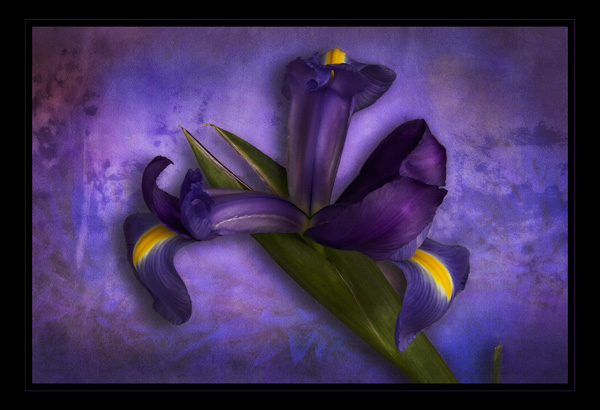
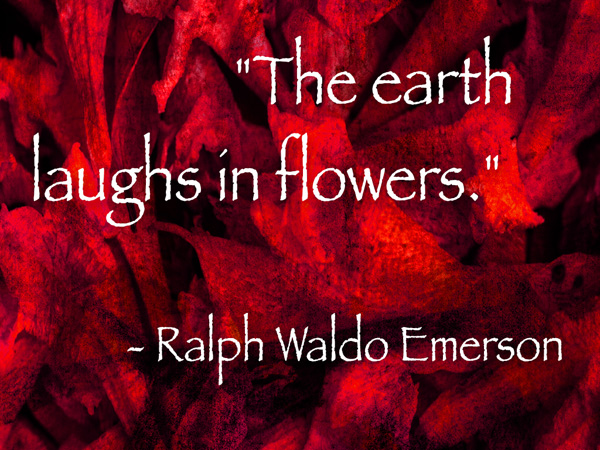 “The earth laughs in flowers.” – Ralph Waldo Emerson
 ‘Iris’ – Accepted into the Professional Photographer of America Loan Collection in 2014