Today is the start of a new feature here on the Successful-Photographer blog. Wandering will have images from a walk around a place with no other objective than to see what images might be gathered. Wandering is a way to keep your eye sharp and experiment with new ideas or test out new gear.
The first stop on the SP wandering tour is Downtown Scottsdale, Arizona. Scottsdale is a high-end community with lots of art galleries and interesting new architecture mixed with buildings built in the ’20’s. I was down in the Valley of the Sun for meetings that started in early morning and stretched into the night with some downtime in the middle of the day. With full sun basting the town I thought it would be fun to put the infrared camera through some paces. For convenience, I mounted the 14-140mm (28-280mm full frame equivalent) on the LifePixel converted IR and set off to see what I could capture.
Fountain on the central circle.
Working on the sign under the palms.
Glowing palms against the modern architecture.
‘Love is…’ bulletin-blackboard outside a restaurant. Even though there was no full sun the infrared capture renders this scene with lots of contrast.
Nordstroms tower architectural detail.
Always having a camera with you allows you to take downtime and turn it into a learning experience. With the light weight and quality of the micro four thirds cameras, it’s easier than ever to always have a reliable capture device with you.
I never know what will be the inspiration for the Sunday Photo/Art Quotes here on Successful Photographer. Occasionally something will jump out at me and catch my attention like turning a corner and seeing a snake that makes the heart get to racing.
This week was like that.
And it wasn’t specifically an ‘ART’ quote. But one I believe that can help lead you to make good art. Today’s quote comes from photographer Jill Davidson. It was in a Facebook post. Just the quote and no elaboration. Those are the short quotes I find the most inspiring.
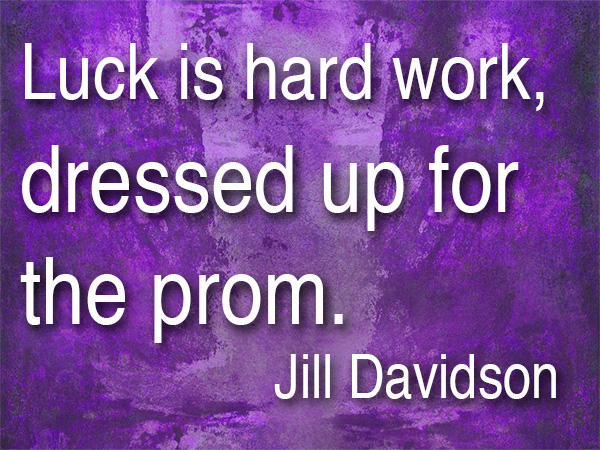
“Luck is hard work, dressed up for the prom.” Jill Davidson
This is a theme that runs pretty regularly here in the blog, and I’m always looking for new ways to express and remind myself that it takes work to become lucky. I know I am extremely fortunate. But I do (almost) always work hard to get there. Funny when I work less I don’t seem to be as lucky. Hmm. I think sometimes photographers come to programs and seminars to learn the quick and easy way to learn a technique. A shortcut if you will. If that is all, they come for they tend to miss the underlying depth and dimension fo the technique and it is a mere shadow of what the presenter was sharing. Please remember that continuing education is great and should be pursued all the time. Learning is a life-long adventure, but it is only the beginning of you being able to create more artistic images.
Are you dressed up for the prom and putting in the work? Or are you wearing your sweats and T-shirt?
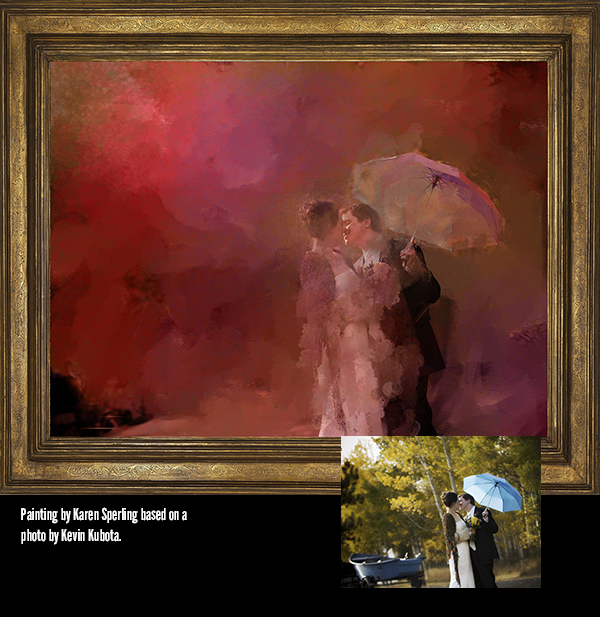
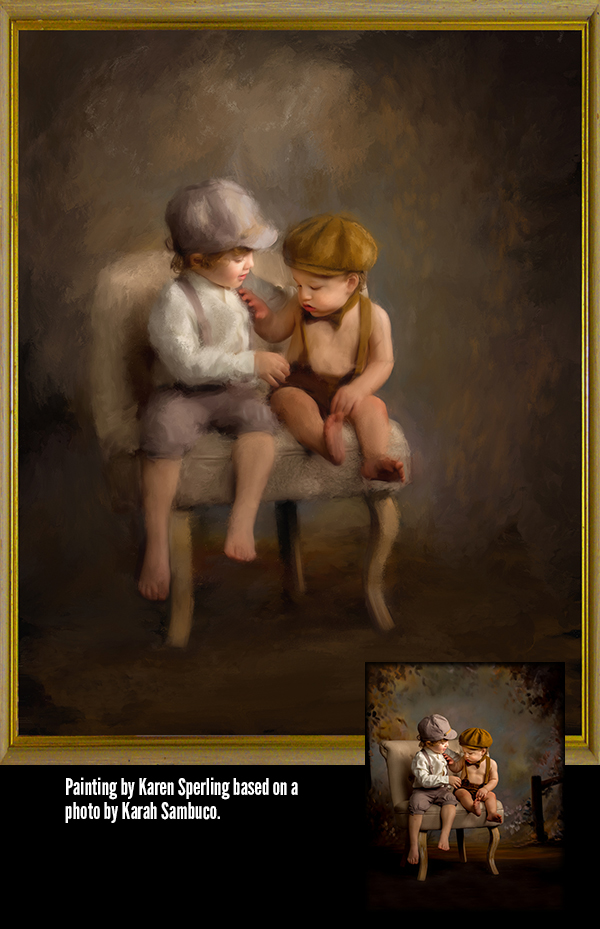
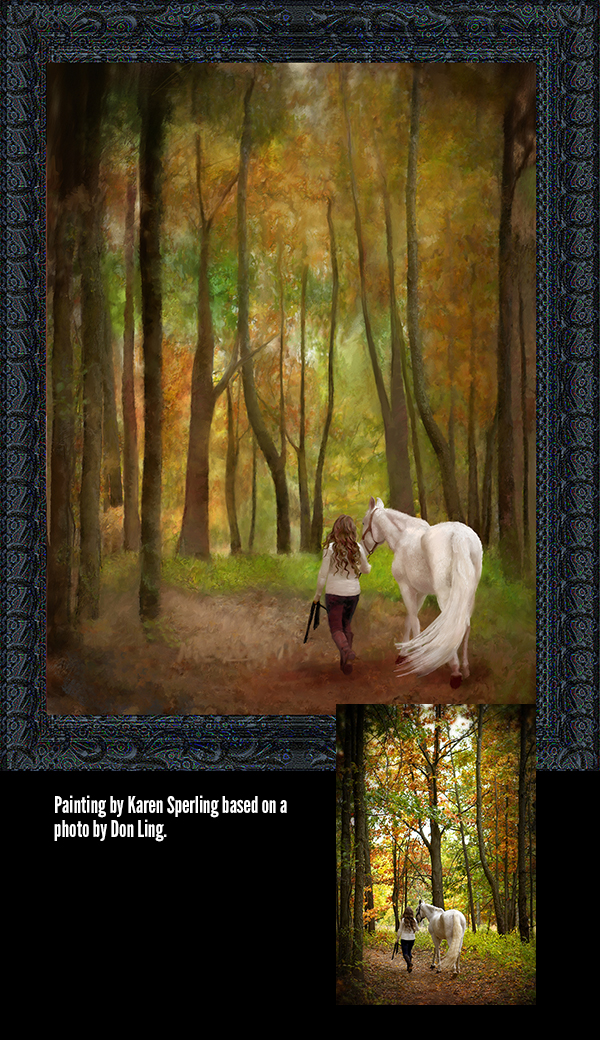
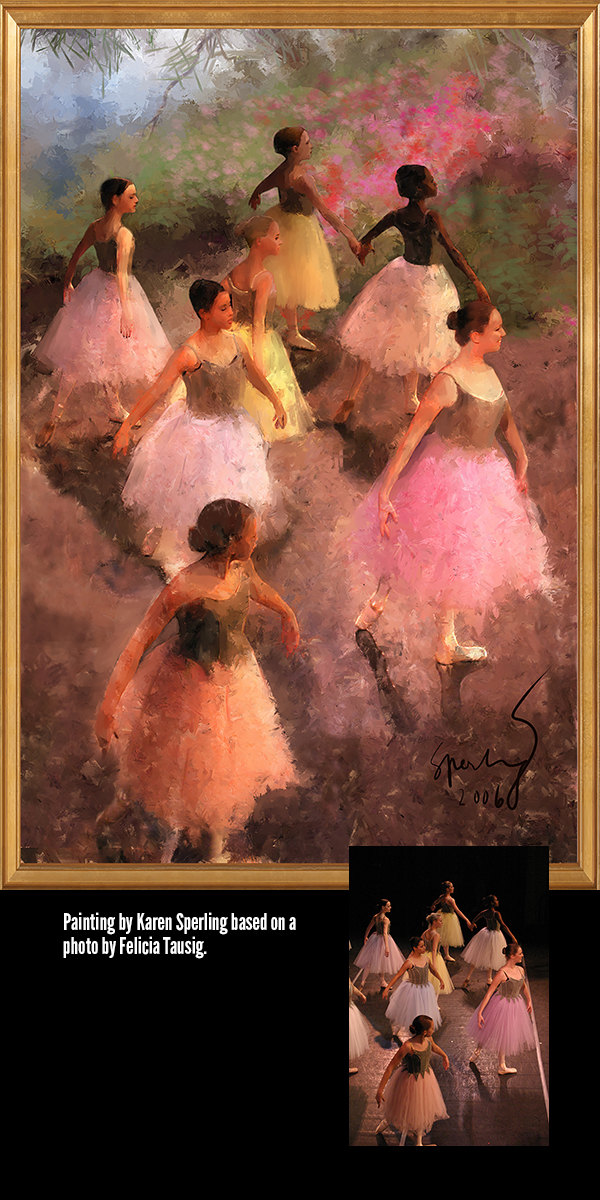
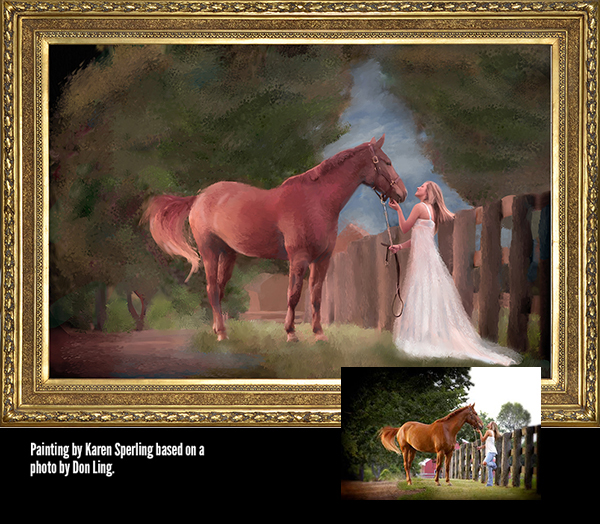
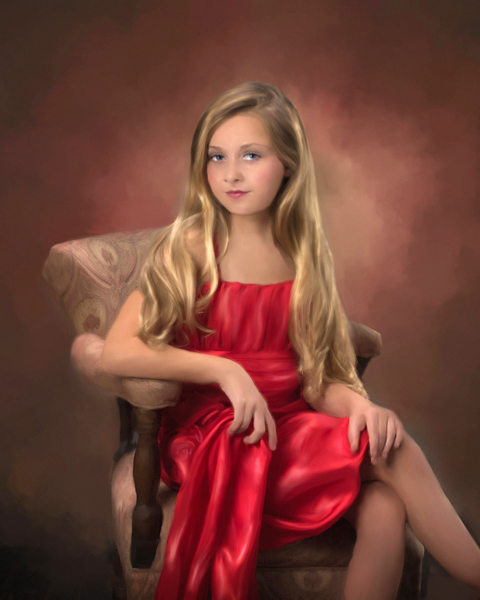
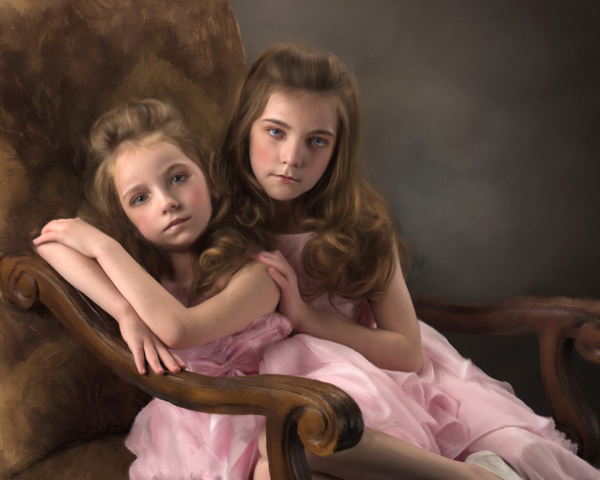
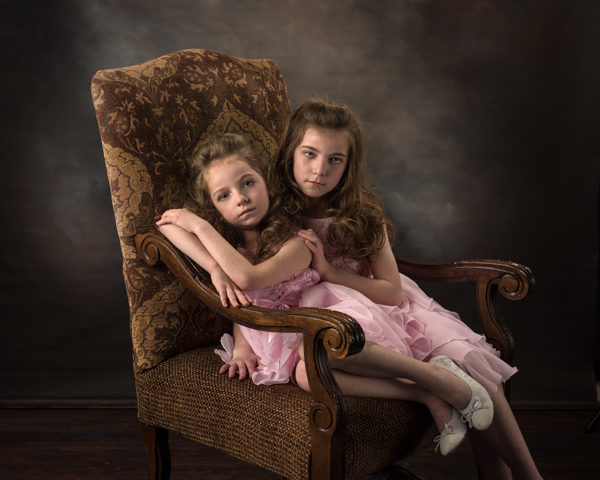
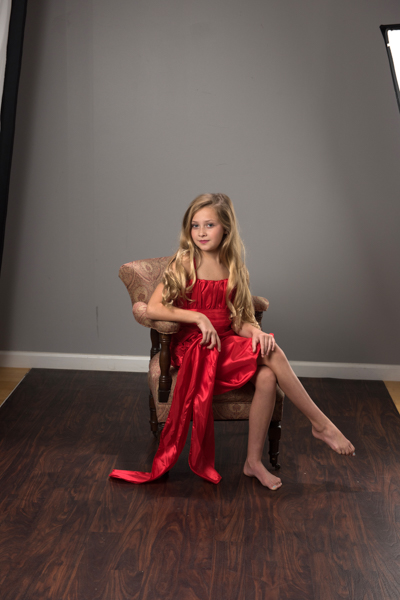
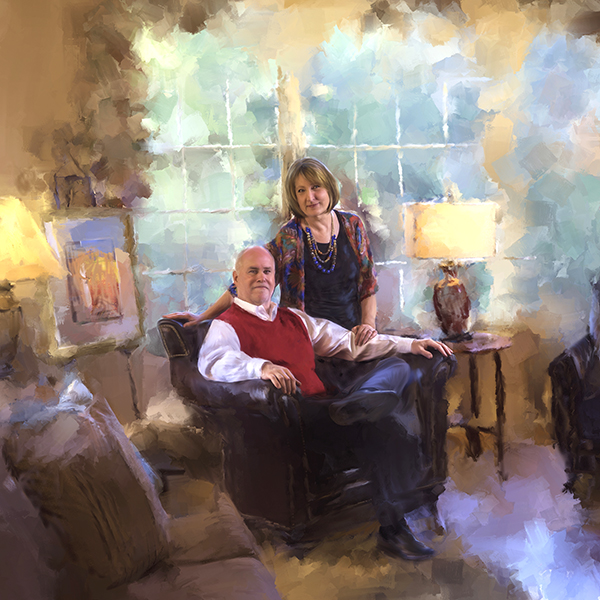
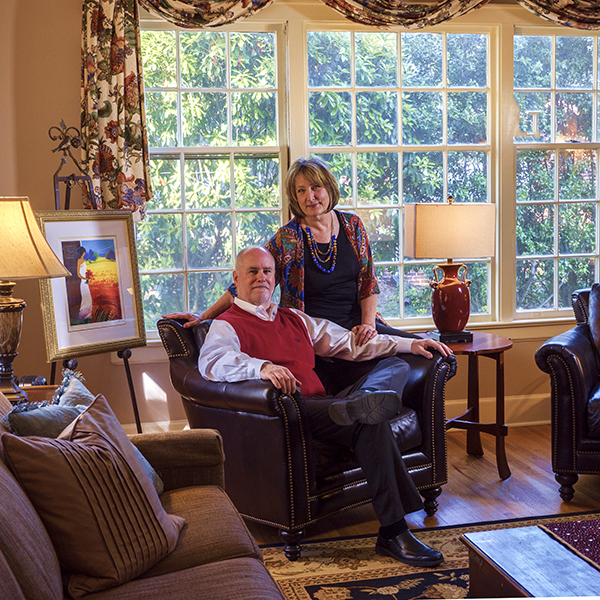
Karen’s exquisite work speaks for itself. I’ll let her tell ‘the rest of the Story.’
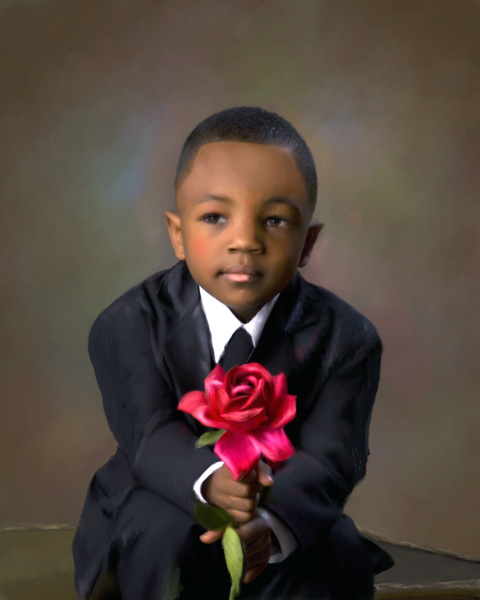
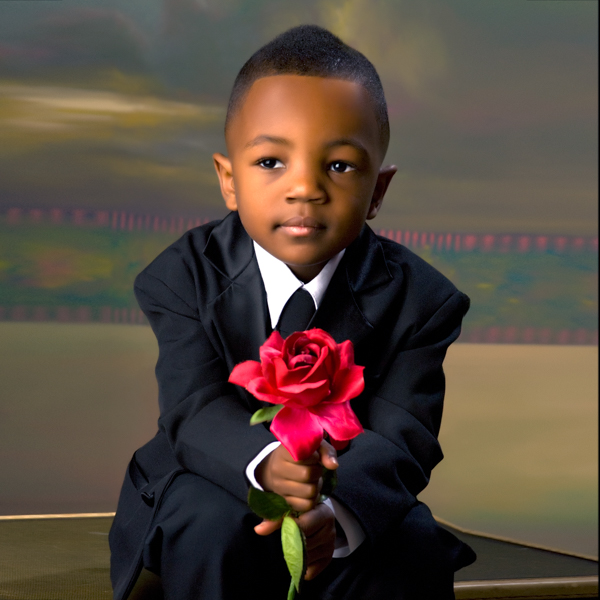
“My mother was an artist and my father enjoyed photography, so I’ve been painting and taking photos for as long as I can remember. But I never actually finished anything because I was never encouraged to paint or take photos. So I majored in English in college and after graduating, I worked as a writer and an editor for newspapers, magazines and book publishers, including McGraw-Hill. But I never forgot about art and photography. I minored in art in college and continued to dabble in painting and photography through the years and spent a lot of time in museums and galleries.
“Little did I know that I was creating the perfect skill set for writing the first Painter manual, a gig I got through networking in the New York Mac Users Group in the late 1980s. And I’ve been writing about and teaching Painter ever since.
I never thought of myself as an artist and in the early days, I featured the work of other artists in my Painter tutorials, classes, and books. In 2001, after my talk at the national PPA convention, the editor of PEI, a magazine that was later folded into Professional Photographer Magazine, invited me to do an article about creating my art in Painter. When I said I didn’t paint, she said, “You could do it.” And I did! A little encouragement went a long way, and I use this experience daily teaching photographers to paint. I honestly believe if you think you can paint, you probably can, and I’m here to encourage you to try. It’s amazing how much you can do when someone whispers in your ear; you can do it.
“My involvement with Painter has opened doors that I would never have imagined. In 2003 I started to paint commissioned portraits directly for clients and photographers for their customers. And in 2007 I had my first gallery show in New York of my abstract art. More recently, I was named the exclusively commissioned painter for a TV cover manufacturer.
“So I went from not thinking of myself as an artist to being paid for paintings, which is why I truly believe if I can do it, you can, with study and practice, and I encourage you to try.
Because of my many years teaching Painter, I have many different painting styles because I’m always interested in showing something new. One of the things I like about Painter is experimenting and inventing new looks and styles. I know having a lot of different styles goes against the grain of most photography experts who say you should promote one style, but I look to Picasso, who had many styles during his career. So we’ll call my style eclectic so that I can keep painting in any way I like at the moment.
“I find offering different styles helps sell commissioned portraits to a broader base of clients and photographers. I also offer a variety of styles in my books, videos, and classes. I encourage students to try all the different styles I teach. In this way, they can pick and choose elements to include in their own paintings to create their individual style. Too many times, students paint exactly like someone they studied with instead of finding their own voice and vision.
“If you’ve been thinking about learning to paint, I encourage you to try, and if you’ve been thinking about offering paintings based on your photos to your clients, I urge you to try that, too. And I’m here to either paint for you or to show you how to do it yourself!”
Biography
Karen Sperling is an Elite Corel Painter Master and the original Painter expert—she wrote the first several Painter manuals when the software was first invented, and many published Painter books, including her newly published Painting for Photographers Volume 3, currently available at Amazon.
Karen wrote one of the Forewords and was a featured artist in Cecil Wiliams’ book, Painter Showcase.
Karen has been interviewed on radio and in many podcasts, including Michael Coy’s Cashtography.
Sperling has taught photographers to use Corel Painter at just about every venue there is, including the national Professional Photographers of America (PPA) and WPPI conventions, local PPA affiliates and PPA schools. Photographers travel to study with Karen in Los Angeles from as far away as the United Kingdom, New Zealand and South Africa, and from all around the United States, both in classes and individually.
Karen is known for taking complex art and software concepts and boiling them down into easy-to-follow, thorough steps. Her concise, complete books, tutorials, and classes have made painting accessible to photographers who never thought they could paint, but always wanted to try. Karen demystifies Painter’s mysteries and photographers who study with her report being able to sell their works of art to commissioned portrait clients and in galleries for tens of thousands of dollars.
Clients and photographers alike commission painted portraits by Karen Sperling, an artist in her own right who minored in art in college and who has exhibited her paintings in New York and Los Angeles and during Art Basel Miami Beach.
Seth Goodin is an author of seventeen books and shares lots of ideas about marketing. I’m grabbing a quote from him that hits the heart of creators.
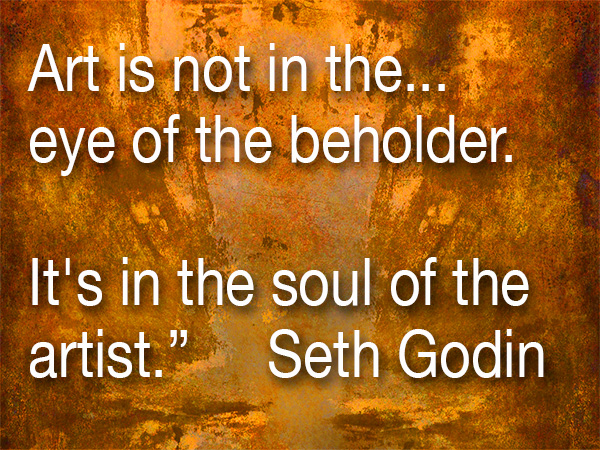
Art is not in the …eye of the beholder. It’s in the soul of the artist.” ― Seth Godin
Let’s go to the expanded version from which I pulled this quote.
“Art is what we call…the thing an artist does.
It’s not the medium or the oil or the price or whether it hangs on a wall or you eat it. What matters, what makes it art, is that the person who made it overcame the resistance, ignored the voice of doubt and made something worth making. Something risky. Something human.
Art is not in the …eye of the beholder. It’s in the soul of the artist.” ― Seth Godin
Show your soul.
Yours in Creative Photography, Bob
PS – There is one other thought that I believe came from Dean Collins. “Beauty is in the eyes of the checkbook holder.” Hmmmm, maybe there’s a middle ground somewhere. You decide.
Well, I gotta tell ya it’s been very busy and I’ve been remiss in posting here for about a week. I photographed a four-day event coverage job with its attendant post-processing along with my regular work. There are only so many hours in a day so the blog had to wait.
I’m back!
And I got a lens I was lusting after to add to my quiver that I’ve started testing. The Lumix 100-400mm G Leica DG Vario-Elmar f 4.0-6.3 lens is as beautiful as I thought. I do not normally get too excited about glass for my cameras. I think of them as tools, and if they do their job as advertised, I’m cool with them. Occasionally, a lens tends to perform over-and-above That’s when I get excited. The 100-400mm is one of those lenses.
I went back out to the Sedona Wetlands for a quick test and here are some results.
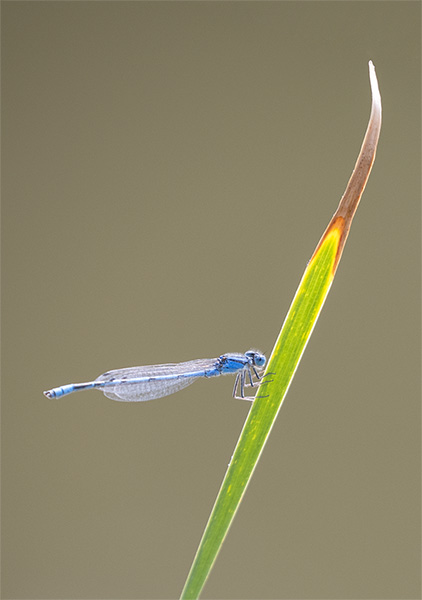
Blue Dragonfly – I was unable to identify this dragonfly. Wonder if it’s because it’s a juvenile and the wings haven’t changed yet. Any ideas??!!
Even though there were quite a few of these critters darting in and out of the stalks of green I could barely see them. They are tiny. Tiny and almost transparent. With some patience, I was able to finally track one of the dragonflies down that took a moment to rest. Excellent detail of something I almost couldn’t see. Oh by-the-way, I was hand-holding the shot with the lens racked all the way out to the 800mm equivalent. As a matter of fact I handheld all the images in this post at the 800mm equivalent. The GX85 was the camera and was a help in this regard as it is using five-axis image stabilization.
Even at f6.3, there’s some beautiful separation from the background with this lens.
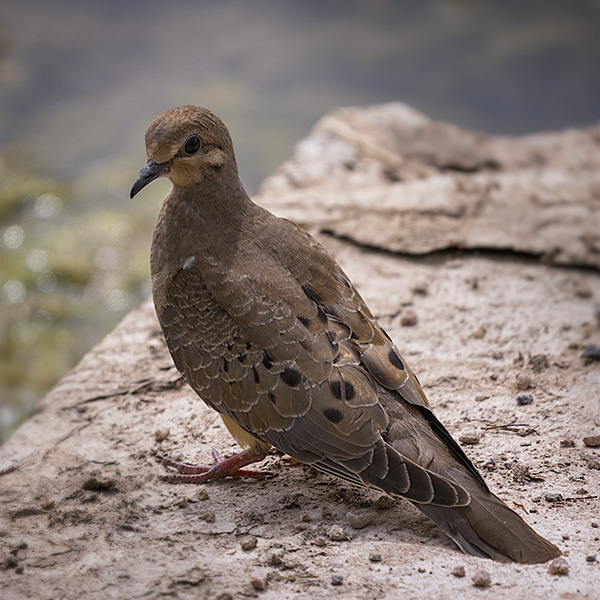
Mourning Dove – A bird capable of attaining flight speeds of 55 MPH hung around for a portrait. Sweet.
Not so much a beautiful photo, but a test to see the amount of detail that can be represented in the feathers. Sharpness is enhanced in this camera by the removal of the anti-alias filter. I might look to extract the bird from the background and use the pattern of the feathers in an art piece. We’ll see.
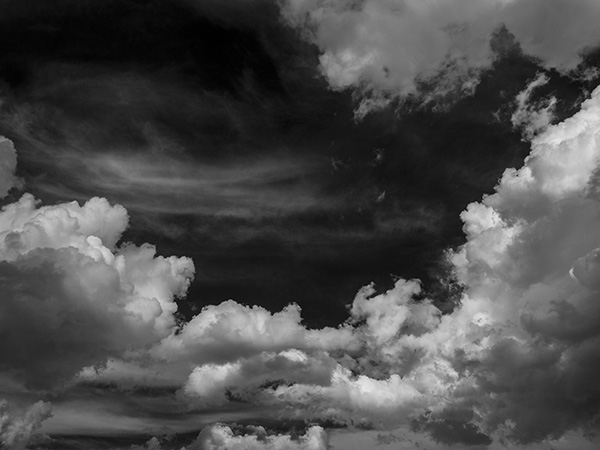
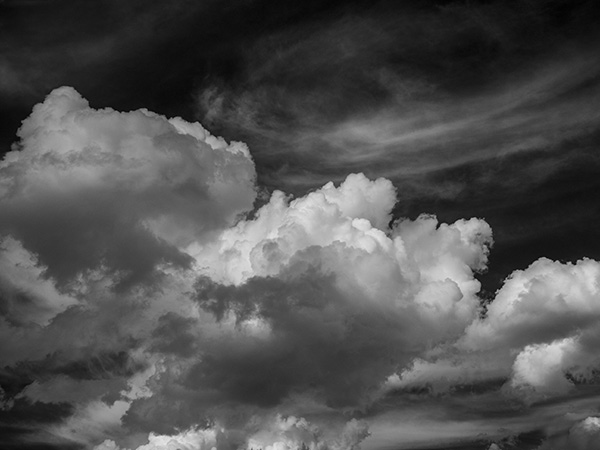
I enjoy the high-contrast look of clouds when photographed in infrared. I use a Lumix G6 with the filter changed out to infrared by LifePixel.
Processed in Adobe Camera RAW
Clouds can have lots of personality when paired with an infrared capture. The high contrast can be a lot of fun. I’m starting to collect IR cloud images just as I have for my regular work. Having a library of clouds can help add interest to art photo composites.
These were taken in Sedona.
I was cooking dinner and looked out of the window and saw the clouds starting to march through the area. They only showed this kind of depth for a few minutes. If you see cloud formations happening, take it ASAP. Usually, if you wait a little bit, or drive down the road a little ways you won’t get what you were looking for as clouds are an ever changing kaleidoscope of shape and form.
“As a child, I was always intrigued with the old black and white photos my dad shared with me about his experience in WWII and how each image told a story of a time before me. My dad gave me my first SLR camera when I was in middle school. My love of photography took off! I was hooked and drawn to capturing landscapes, flowers, and bug pictures. Together, we used the darkroom equipment in our basement. I was in awe as I watched images appear on the glossy white paper right in front of my eyes.
I landed a job at the local 6 Hour Film Lab. Instead of sending the small cassette of film off to be developed, I was able to develop and print in the small re-purposed gas station. I spent mornings in the dark cracking open cassettes and hanging the film on big reel hangers which mechanically dipped the hangers into the developing bins and through the big dryers. Afternoons were spent viewing the film. Once the film was printed, I gathered the big reel of paper and started it on its way through the paper developer machine.
Didn’t know then, but later was amazed that my Lab experience helped me in my photography business with such things as color, density, and over and under-exposed negatives.
I loved to work for the owner’s of the lab at their Camera Store/Portrait Studio. I would spend hours watching the owner take portrait sessions. She encouraged me to learn.
I’ve studied under some amazing talented masters but a few who really touched my heart throughout the years are Van Moore, John and Mary Beavers, Colbert Howell and Rick Alexander. Without the teaching and giving of themselves, I would not be who I am today.
I have welcomed the digital era diving full force in 2000 converting to one hundred percent digital medium from film and have never looked back. I love the flexibility of the digital darkroom aka the computer! I continue to learn and move upward with the flow as the digital medium is in constant change.
With the switch to the digital era, came a glimpse of something new again. I sat in a class taught by Marilyn Sholin teaching Correl Painter. It was the vibrant colors and uniqueness of her portrait art that caught my eye. I told myself that day; I needed to learn more about this amazing technique. She was offering workshops just two hours from Charlotte. I enrolled in one of her workshops and again was hooked! The creativity I hoped to accomplish with painter was that of what I see on the walls in museums! I have continued to grow as a photographic artist the past six years or so with the help of Marilyn and her workshops and private tutoring.
Myself, being a photographer, I was inclined to stay in the lines and make a photographic print. She has taught me to be loose, messy and think outside the lines. She encourages her students not to copy but to create a style of their own. In doing so, Marilyn directed me to another Master Artist, Heather Michelle. Heather’s style of painting is more of a traditional approach as well as teaching color theory. Just what I needed as a classically trained portrait photographer. After studying under both of these Master Artists, I’ve tried to take both styles and techniques and make something of my own. Every painting I do is a work of art from my heart.
I would encourage you to always continue your education. Embrace the new! Accept the challenge ofchange and make it your own.
Take your craft and your experience and be open to share it with one another. Looking back on my successful career of over 30 years, I am so thankful to those that shared their knowledge with me.
One Moment, One Click of a Shutter and Time Stands Still Forever…
Happy brush strokes!”
To see more of Sandy’s work. www.PhotographicElegance.net
Biography
Sandy Harrison was born in Port Huron, Michigan. She started her career in photography at the age of 20, just newly married. She continued living in Michigan while starting a family and pursuing her passion for photography until moving to Charlotte, North Carolina in 1988 where it
would be a reality and full-time employment in a portrait studio. There she learned the art of classical lighting and posing from Master photographers at the local and state conventions
and workshops.
Sandy embraced her craft and was hired to photograph well-known dignitaries such as Michael Gorbachev. She was hired to photograph basketball star, Larry Johnson’s wedding along with many of the Charlotte Hornet basketball families in the 1990’s. She was also the first to be featured on the Carolina Bride Magazines cover adorning Lisa Cooley, Charlotte’s premiere news person. Sandy’s keen eye and ability to capture the true essence her subject makes her a sought after photographic artist. Her work continues and hangs in many homes in Charlotte and the surrounding area.
Sandy pioneered the digital era in the Charlotte area being one of the first to make the transition to
the new digital media. In doing so, she surpassed many of her associates and got a head start
in the digital world in 1999 and has never looked back.
Keeping true to her passion and drive wanting to learn new things, Sandy started painting portraits in
2009. She continually studies under several Master Painters and is always expanding her knowledge in
yet another medium.
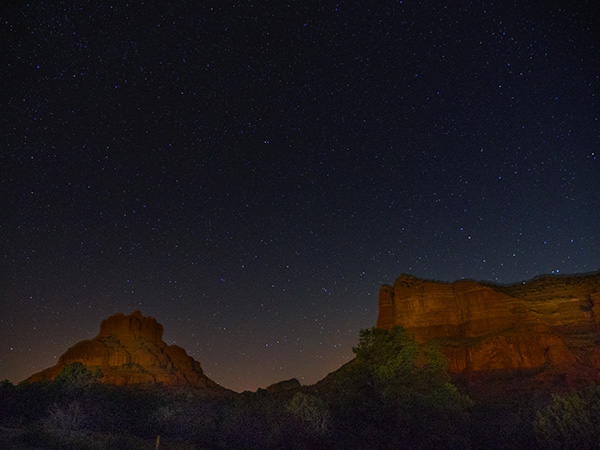
Last week I showed you some night sky photography with some stills blended together. When shooting night skies getting some detail into the foreground takes a bit of work when you are shooting in a dark skies compliant area like Sedona, Arizona. While I was capturing those images with my Lumix GX85 I set up the Lumix GX8 on a tripod for a time lapse sequence.
The lens was the Vario 12-35mm f2.8 set at f2.8. ISO 200 and 30-second exposures. I set the interval to 32-seconds to give the camera a little time to reset. Noise reduction setting was disabled as the camera would have been taking an extra 30 seconds to create the noise reduction for each image. Way too long for what I was trying to do. Using the camera’s processing I was able to make videos at various settings without any problems at all. Here is a minute and a half video showing all of the results including an edit with Photoshop.
Stars are making a circle around the north star. Funny how they twinkle just as they do when you are looking at them live.
Time Lapse Video of 140 images processed in-camera at twenty-four, twelve , eight and four frames per second. I also processed the images in Adobe Photoshop using the timeline to create a ten frames per second video.
One note. I was able to take the RAW files into Photoshop and process the red rock area different than the sky area which allows more detail and color to be in the final video. All the files were imported into Adobe Premiere and resized, captioned and rendered to HD. The videos I made in-camera were processed out as 4K files which gives more possibilities in the final movie. I could have left them large and then had the possibility of movement like panning or zooming through the video to create even more interest.
Here is a still image processed from the same scene. A one second and a thirty-second exposure blended with extra process in MacPhun’s Intensify CK
On this Sunday fifteen years after the terrorist attack I’ll ask that as you go about your business today, no matter what it may be, that you take a moment to…
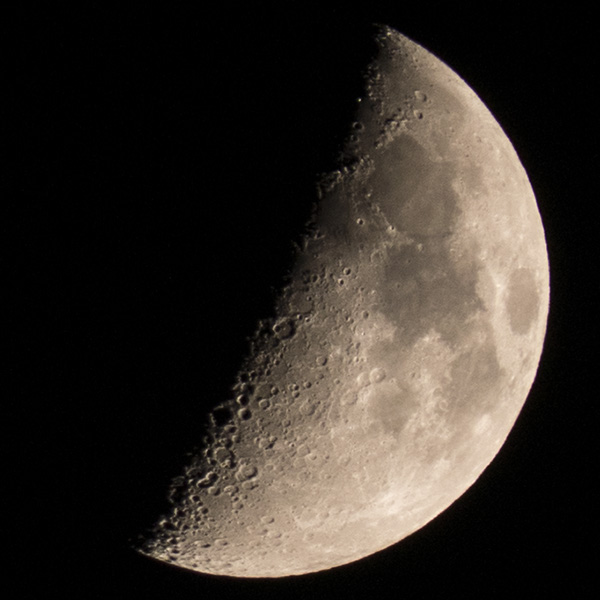
The half moon was high in the cloudless sky. I thought this would make an interesting test of the Lumix GX85 and the 100-300mm f4.0-5.6 lens extended all the way. I don’t recommend handheld shooting at this range with the lens set at 600mm equivalent. At night. But, I’ve been interested in how far the in-camera and lens stabilization can be pushed on this new camera.
And I keep finding myself pleasantly surprised.
Half moon photographed handheld with 600mm equivalent lens at f5.6 ISO 200 1/250th of a second
I don’t have a huge image to work with as after it was cropped from the frame it was about 750 pixels. What impressed me is the detail and sharpness of what was captured. I’m liking this little camera a lot.
For infrared conversion of my cameras I use LifePixel. Infrared allows you to put an older camera to use and opens up a new time time of day for productive image creation.
Learn Photoshop in a fun environment. Aaron Nace applies the right amount of fun with easy to understand and follow tutorials. Actions and brushes are included with lessons!
Best embroidery ever. Give Queensboro a try, get a $20 instant credit to get started by clicking on the logo! They specialize in great quality custom logo apparel and promotional products with the best customer service.
Platypod has become a great resource for being creative in getting your camera gear easily into unusual places. As an Platypod Pro I get to work/play with the gear even before it comes out. Head over to Platypod, subscribe to the newsletter and you will get special discounts reserved only for subscribers.

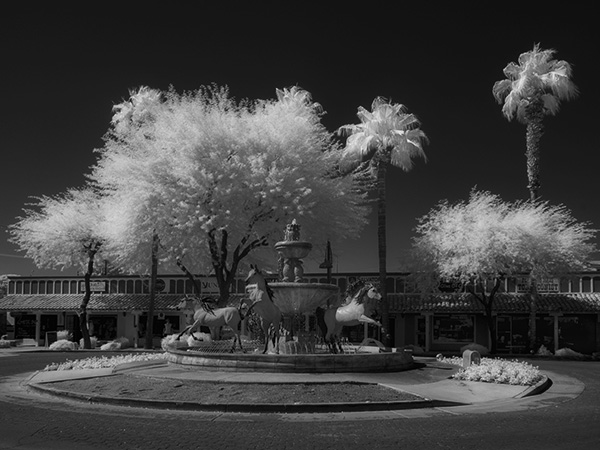 Fountain on the central circle.
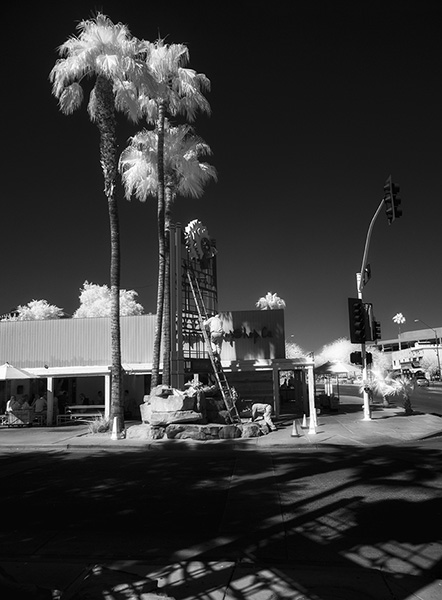 Working on the sign under the palms.
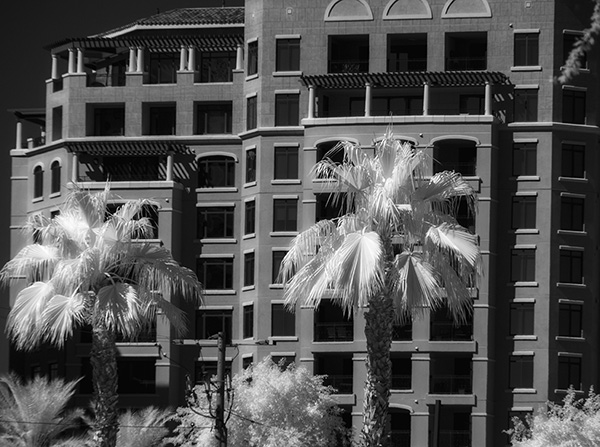
 Glowing palms against the modern architecture.
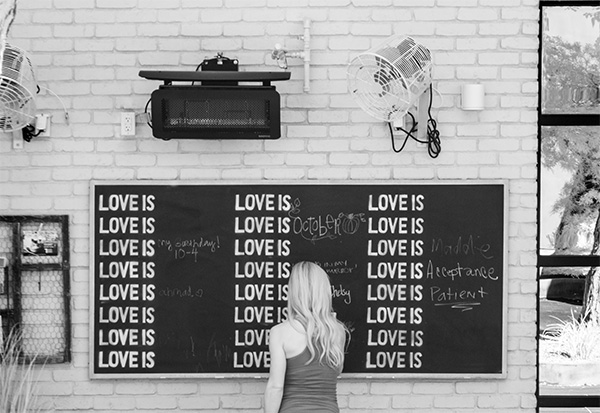 ‘Love is…’ bulletin-blackboard outside a restaurant. Even though there was no full sun the infrared capture renders this scene with lots of contrast.
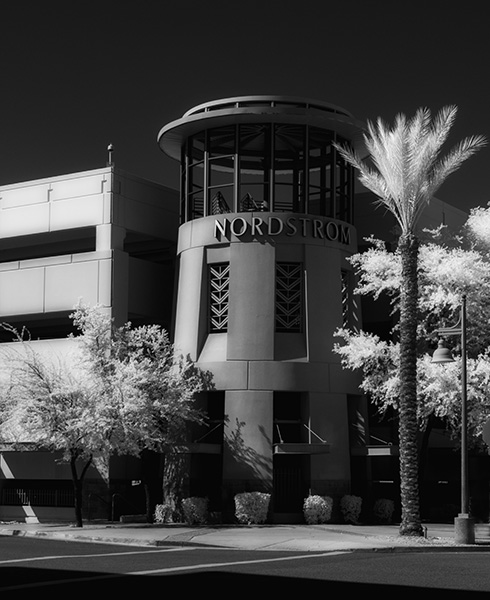 Nordstroms tower architectural detail.