That’s how most people describe their foray in being in front of a camera. I believe that three quarters or more of my job is to get people to open up their real personality… And the only way to do that is to coach people through the experience and have them feel good.
I can do that. I know, because when I was working on a nude art calendar to raise money for the Sedona Arts Center people were SO comfortable that halfway through many sessions I would have to remind them to cover up while we were reviewing images.
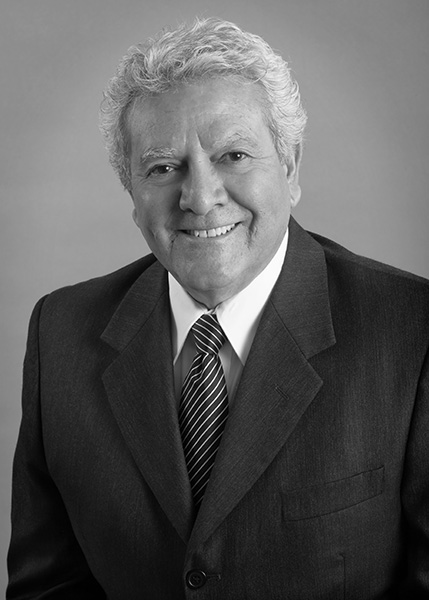
Alberto Salas wanted a quick solid business portrait for use by the marketing team for Wells Fargo. He came with very specific instructions on the file format and cropping. But within that I think I caught the sparkle in his eye and by taking a slightly higher camera angle made him look friendly and approachable. The person in the photograph is looking up at the viewer making the viewer be above in a more powerful position. Think about camera angles when trying to sell what your subject wants to say. If you want to portray more powerful, strong personality take a lower angle so the person in the photo is looking slightly down at the viewer. Remember it doesn’t take much…
Alberto walked in the door, I set up the lighting, got him comfortable with conversation, created his portrait, retouched the image and burned the files to disk. And, he was done in about one half hour.
I choose a modified split lighting pattern. Note the shadow side of Alberto’s face. Shadow creates form and depth and what is usually missing from a non-professional executive portrait.
I highly recommend that you do the black and white conversion so someone is not tempted to push the grey-scale button that causes the loss of contrast in the image.
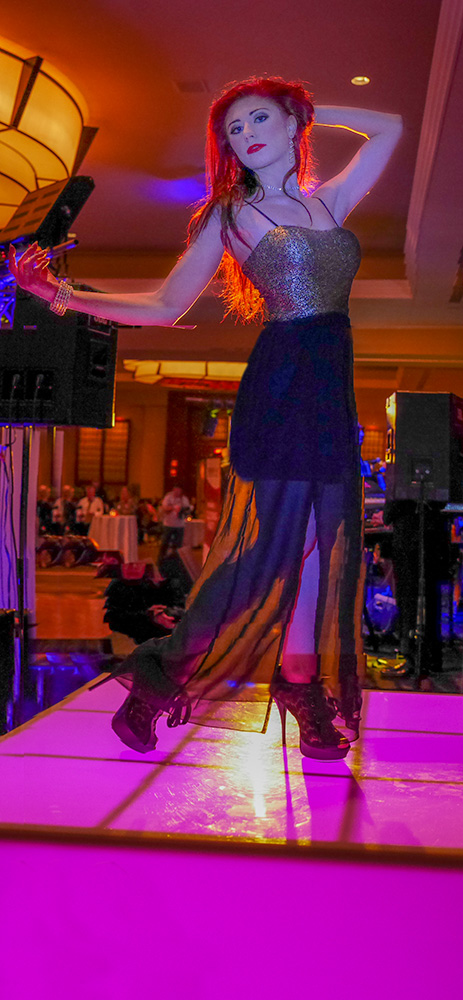
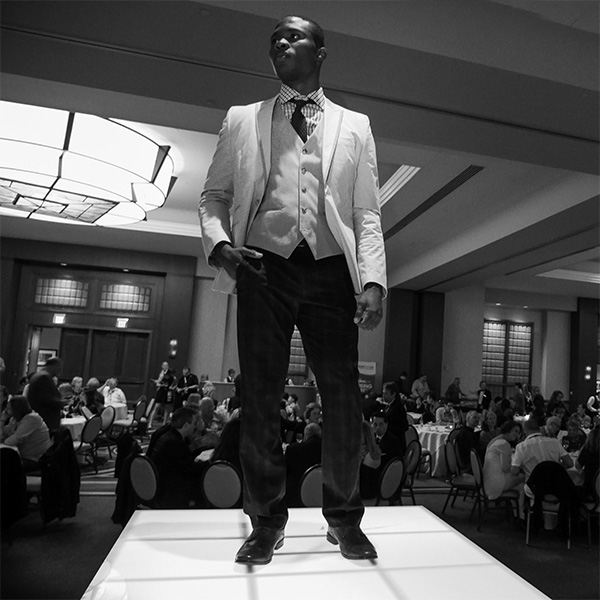
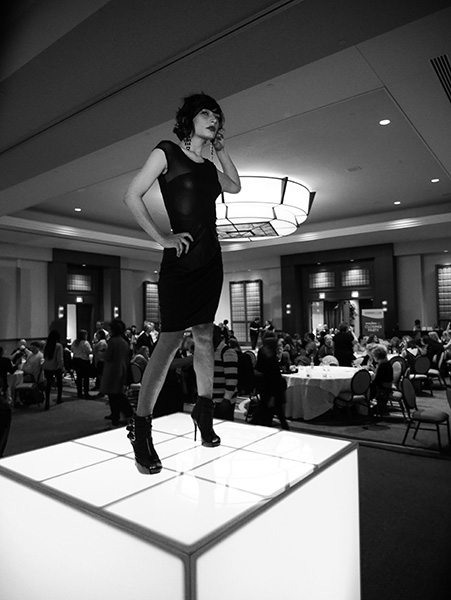
That’s what I call it. The closing party at Imaging USA was graced with models that held different poses while on lit podiums. It was an interesting exercise to try and capture images with the low ambient light and the glowing stands. I was surprised how well the Lumix GX7 performed in these conditions. I cranked up the ISO to 3200 and added a little bit of light with a small LED flashlight for some of these.
Captured as a vertical panorama in very contrasty low light conditions. There was one spot where the model moved during the capture but I was able to fix where the stitching went wrong. No fault of the camera. I was surprised it was able to do as well as it did!
ISO 3200 hand held almost dark room… Black and white preset on camera
ISO 3200 hand held almost dark room… Black and white preset on camera
And something I think Peter Adams was talking about in this morning’s photo/art quote. Many photographers chase the holy grail of getting the bestest, newest and greatest camera thinking it will help them make a better image. While I agree having more and better tools at one’s disposal is not a bad thing but if you don’t see and understand the light the way the camera does you won’t be making memorable photographs.
“Photography is not about cameras, gadgets and gizmos. Photography is about photographers. A camera didn’t make a great picture anymore than a typewriter wrote a great novel.” Peter Adams
So what’s a great way to become a better image maker? Learn the language of light. How many lighting terms do you know? How many words do you have to describe shadows? Light direction? Reflection? Direction? Ratio? Color consistency? Hue and saturation?
I’m going to give you a link to a single page of photography lighting terms. Spend some time there. I promise if you review and learn a bunch of these terms and definitions you will give your brain a new way of thinking and expressing light. When you have a larger vocabulary you will be able to see light in a new light… And that will make huge difference. http://www.lowel.com/edu/glossary/
Yours in photography, Bob
PS – After you get finished with that page poke around on your own. Learn color theory from the side of painters and spend time in museums viewing classic art from the masters.
This Photoshop tutorial will help you sharpen your images for different output.
An image being reproduced on Inkjet paper or being printed by your photo lab requires different amounts of sharpening for optimal quality for magazine or newspaper printing.
Different subject matter or even different printing mediums need different amounts of sharpening also. Here’s a way for you to harness the power of Photoshop’s Actions Palette to create a Suite of sharpening actions for many materials and uses.
Photoshop Tutorial for sharpening images for different output or medium.
Chills! They wandered up and down my spine when I saw this video.
This presentation is based on images from the Professional Photographers of America Loan and General collections from the International Print Competition 2013. Awards were presented at the convention held in Phoenix this past week. I proud to have several images included…
When you watch this video crank up the music and make sure you go full screen for the most impact!
In this competition I entered two print cases of four images each. In total I received three general collection merits and four Loan Collection images. I’m proud to be in PPA and a member since 1998 to continue to pursue exellence in imaging so my clients get the very best I can offer. As far as I am concerned when you stop learning your imaging skills start to deteriorate.
I hear the word passion spoken by many photographers in reference to why they are in photography. “I have a passion for capturing images of your family!!” “I’m passionate about making beautiful images…” What many really mean is they enjoy making images and they really LIKE doing what they do. Nothing wrong with that for sure.
I would like to ask you to think long and hard about this quote from Roy Williams.
“Passion does not produce commitment. Commitment produces passion.”
Are you committed to making the absolute best images possible for your clients? By that i mean are you practicing your skills daily? Studying to find ways to add more depth, dimension and emotion in your photographs?? I don;t mean practicing when you are paid assignments. Tiger Woods doesn’t win golf tournaments because he goes out from Thursday through Sunday. It’s because of his commitment to practice, practice, practice and to hire coaches to help him understand what he needs to work on to get better and stay on top of his game. Do you know your gear inside and out? is the camera second nature in your hand? Or, are you fiddling and looking for settings when your mlnd should be on creativity not tech stuff?? Do you have all the tools you need? Do you know how to use them?
So, I ask one more time are you ‘passionate’? Or are you committed? There’s quite a big difference!
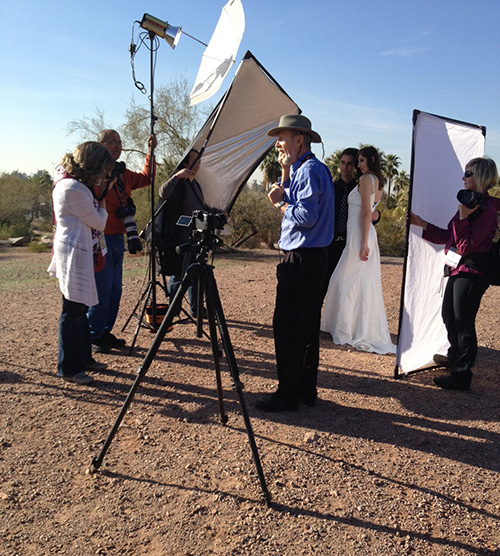
Had an awesome 2 days teaching a class called ‘Off to the Desert Photo Shoot’ on Friday and Saturday. Showing how to get some great light in harsh daylight conditions using many different tools. I’ll be in the Panasonic booth or the Lumix Lounge for the rest ofthe convention during trade show hours. I look forward to seeing you there and talking about the 3rd generation of cameras!!
I-Phone photo by George Hawkins of Bob Coates teaching photo lighting class at Imaging USA Desert photo shoot.
Using lots of tools… Scrims, reflectors, umbrellas, gobos studio mono lights. Thanks to FJ Wescott for the use of some off the modifiers and Paul C Buff for the loan of Vagabond Mini Inverters to make sure we had plenty of power for the lights on location.
Shadow edge transition. Origin and source of light. Specular highlights. Split light. Rembrandt light. Harsh light. Soft light. Nummy light (that’s one of my own!). Inverse Square Law. Fall off. Lighting ratios.
When I started to study auxilliary lighting for my photography I found that seeing the light and working with the light became easier when I learned the language of light. The brain seems to need more ways of expressing what you see in words in order to expand possibilities.
The reason this comes up is because I am reviewing information to share with a couple of Pre-Convention classes I am teaching at ImagingUSA in Phoenix. This led to looking for other people to study from and some book selections that would be a good addition to anyone’s library.
Names to watch for when looking for photography lighting – Dean Collins who is only available through videos captured while he was touring. Some are online available via searching or you can order his complete set of Finelight Videos from Software Cinema Joe McNally, John Hartman, Tony Corbell, Scott Kelby, Mike Fulton, Fuzzy Duenkel and more…
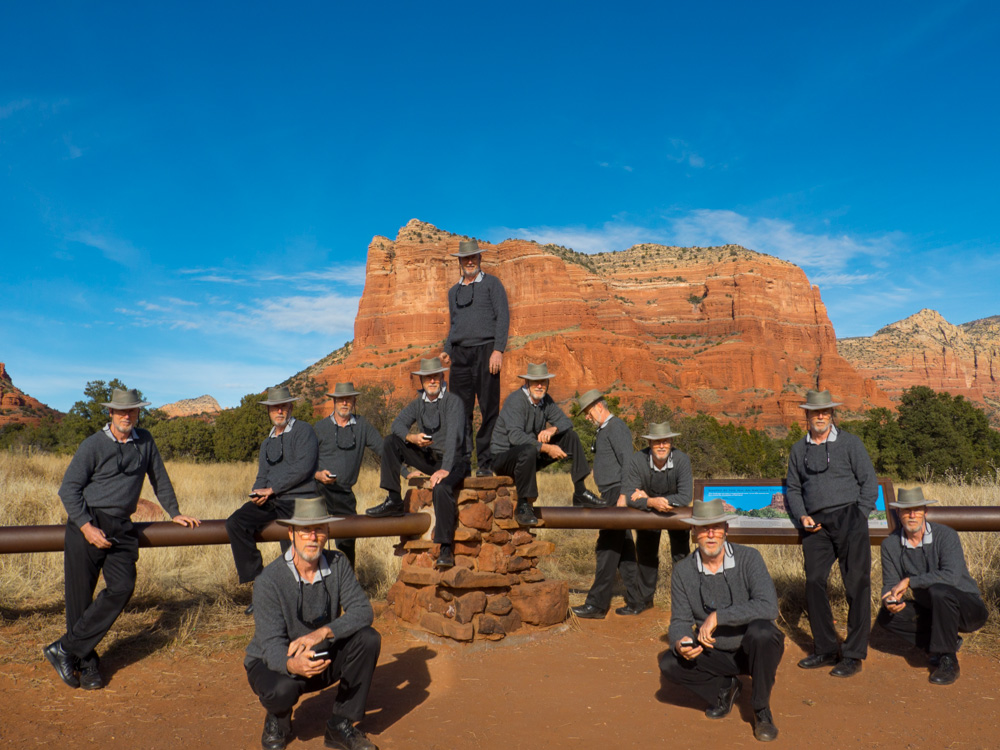
“This is scary!” Said my wife when she saw this photo.I understand. I call this the Dirty Dozen.
This is an illustration for a class about being able to change different areas of an image by locking the camera down on a tripod and making multiple exposures. This can be helpful with large groups of people to get good expressions and body positions. It can be useful when doing outdoor portraits and clouds are scudding across the sky leaving their shadow impressions on the landscape. A good background capture can be made and then concentrate on getting the people looking good without worrying about the rest of the photo. Sometimes you want to get the light source closer to the subject for a better lighting pattern yet it would then be in the frame. You can shoot with the light in the frame and then remove it in post. Very cool stuff indeed.
I captured the images with the Lumix GH3 mounted on a tripod and connected my phone with the on-board WIFI. Control of the camera is with an APP from Panasonic. In addition to tripping the shutter you can control almost all the functions on the camera including shooting modes and see the image on the phone or I-pad.
Courthouse Butte in Sedona, Arizona with twelve Bobs
This from Roy H Williams Pendulum in Action… Definitely worth a look!!
“When I was nineteen, I spent every Saturday from 1 a.m. to 10 a.m. in the control room of a low-power Christian radio station on the AM dial in Oklahoma. Our Saturday program line-up was mostly local guys with a message in their heart and thirty dollars in their pocket. Dick Bailey was one of those guys.
Nine hours came to about twenty dollars a week after taxes, but Pennie and I needed the money, so every Friday I would hurry home after eleven hours in a welding shop, sleep about five hours, then drive forty minutes to the radio station, where I would change tapes for the next nine hours. Lunchtime saw me staggering home to fall into bed. All this for twenty dollars a week — but I got to meet Dick Bailey.”Click to Continue Reading >>
For infrared conversion of my cameras I use LifePixel. Infrared allows you to put an older camera to use and opens up a new time time of day for productive image creation.
Learn Photoshop in a fun environment. Aaron Nace applies the right amount of fun with easy to understand and follow tutorials. Actions and brushes are included with lessons!
Best embroidery ever. Give Queensboro a try, get a $20 instant credit to get started by clicking on the logo! They specialize in great quality custom logo apparel and promotional products with the best customer service.
Platypod has become a great resource for being creative in getting your camera gear easily into unusual places. As an Platypod Pro I get to work/play with the gear even before it comes out. Head over to Platypod, subscribe to the newsletter and you will get special discounts reserved only for subscribers.

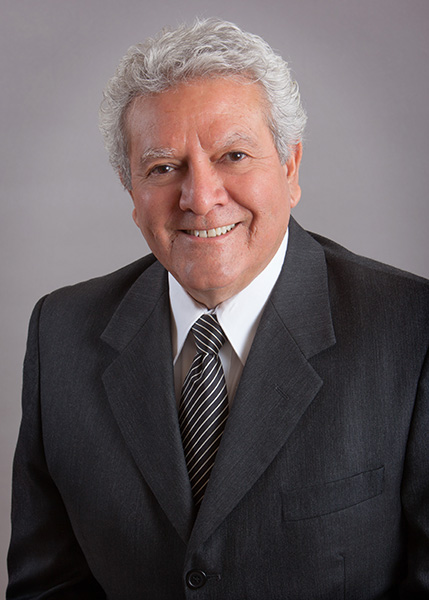 I choose a modified split lighting pattern. Note the shadow side of Alberto’s face. Shadow creates form and depth and what is usually missing from a non-professional executive portrait.
 I highly recommend that you do the black and white conversion so someone is not tempted to push the grey-scale button that causes the loss of contrast in the image.