by successfulbob | commercial photography, fine art musician portrait, Lumix GX7, Lumix Lounge, musician photography, people photography, photography
One of the jobs I really enjoy involves taking the art techniques I’ve been developing and using them for my commercial clients. These have been created for the Sound Bites Grill Wall of Fame. Musicians are photographed live during their performances and then I create 8×10’s for display at the restaurant. It’s an increasing challenge (which I love!) to have a slightly different look for each artist. Here are a drummer, guitarist and keyboard player as part of the latest installment…
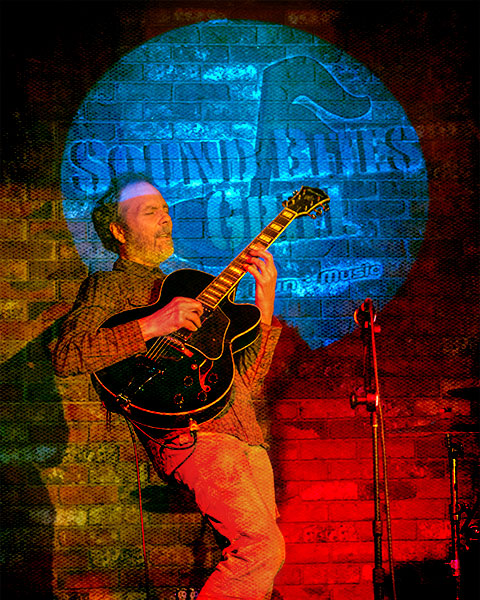 Jazz Guitarist, composer and Recording Engineer Peter Sprague of Road Work Ahead
at Sound Bites Grill Show Lounge
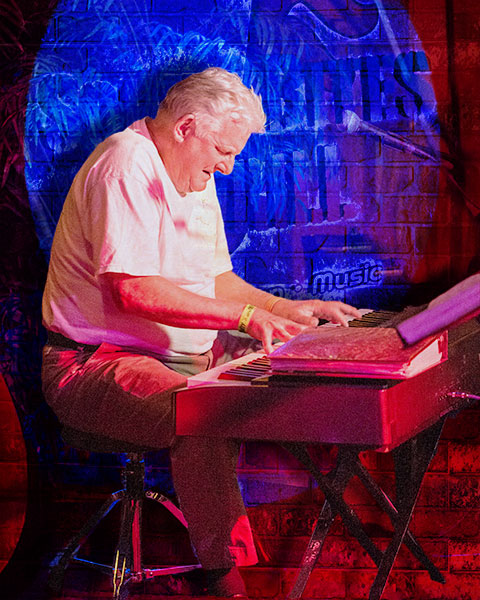 Road Work Ahead Keyboard Player, composer and arranger Bill Mays jams
at the Sound Bites Grill Jazz Fest Jam in Sedona
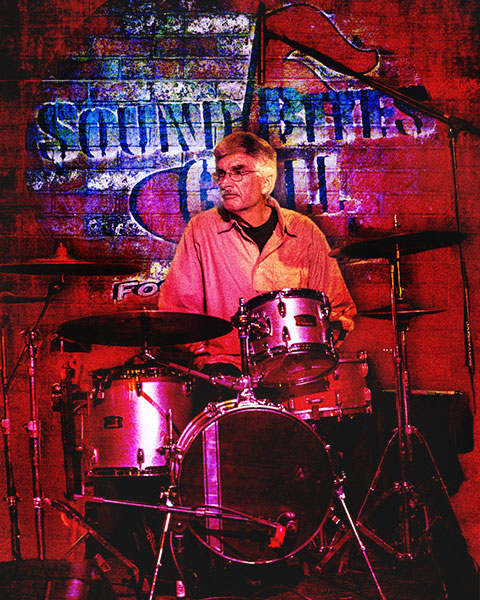 Jim Plank, drummer and percussionist for Road Work Ahead plays on the
Sound Bites Show Lounge stage at the Jazz Jam in March.
Images were captured with the Panasonic Lumix GX7 using the 35-100 (70-200 35mm equivalent) 2.8 lens ISO 2500. This is a great combo for getting intimate images without getting too close to the stage. For some of the captures in the future I might bump the ISO up another notch to get just a bit more shutter speed when the performers are moving.
One of the most important parts of my job is to not be obtrusive when capturing performers. I am very conscious of the guests and not disturbing their enjoyment at performances. The GX7 and lens combo is small and helps me remain low key but strangely enough looks pro enough to get inquiries all the time about what type of camera I’m working with.
After the show images are downloaded. Musicians are separated from the background using Adobe Photoshop’s various selection techniques and placed on their own layer. At that point I can start the art part… Adding shadows, textures, blending modes and lighting effects that were not on the stage.
Yours in Photography, Bob
by successfulbob | Lumix GH3, Lumix Lounge, people photography, photography, photography education, photography gear
Cobblers children go without shoes. Painters houses show peeling paint. You’ve seen the expressions in writing for the professionals not taking care of their own business because they are so busy taking care of others.
Don’t let your own personal look be the victim of this…
Make the commitment to get your head shot updated. When people see your head shot and wonder who the photo is of you gotta know it’s time for a new one. Here’s the way I remade mine. Ideally you might grab a photographer friend and shoot each others photo but when you are hanging out with a little time it’s time to work your own. While I did it I practiced with a lot of the new technology that’s available in the Lumix GH3. Learned some stuff along the way…
I used the facial recognition feature to make sure the photo was in focus. If you have tried to self portraits without this it can be very frustrating. I am pleased to say whether I moved forward, back or to the side during the shoot the focus was dead-nuts on!
 Bob Coates head shot
Used the WiFi capabilities of the GH3 with my IPhone to fire the camera remotely. It’s pretty cool. You can see what the camera sees on the phone. The only problem with that part is when you try to pose and change position it’s like looking in a double mirror. There’s a tendency to move exactly opposite form what you think you are doing. After you get used to it it’s not too much of a problem. Obviously when it’s not you on the phone screen it’s pretty easy.
Why else would you want to use the WiFi connection? Transferring images to the web. Controlling your camera from a distance but still being able to see what the camera sees. Like not disturbing wildlife like birds or a watering hole where animals come to visit. I’m sure you can come up with many more…
Where’s your new head shot? Send me a link!
Yours in Photography, Bob
by successfulbob | photography education, success education
I enjoy seeking inspiration from other art disciplines and Robert Genn and the Painters keys is one that often gives me great ideas… Here’s the start of this week’s post from Robert. If you like what you see go check out the Painters Keys.
Blessed are the curious
March 25, 2014
Dear Artist,
At the risk of once more dividing the world into two main kinds of people, there are two main kinds of people: those who amuse themselves, and those who require amusement from others.
While working late into the night can also produce excellent results, widespread
research shows that success often favours those who start early. (photo by Robin Loznak Photography)
Artists seem to be pretty much of the former kind. Self-amusement prompts creativity.
Mornings are special times for the self-amusing. Curious as to what the day may bring, they often step directly into the amusement area–the studio. What I call “Curious Morning Syndrome” (CMS) is often the simple catalyst for productivity, invention, creativity and success. The blessing, of course, is not always evident to the young. Sleeping-in has ruined many an early career. And some folks must wait until middle or old age for CMS to kick in. Some think it’s a gene. It’s more likely a learned habit.
One way to activate CMS is to simply set yourself up to be curious about the outcome and potential of yesterday’s efforts. A good system is to leave something unfinished when you shut down the studio at night. Better still, leave several things unfinished. The easier, the more enjoyable the task you leave behind, the more the likelihood of an early morning kick-off. At the same time, challenges are often best attacked when you are well rested and fresh. It’s amazing what time and a good sleep can do for problematicals. The cold grey light of dawn automatically presents opportunities to the… continue reading here
by successfulbob | Lumix GX7, Lumix Lounge, photography, photography education
“Do you shoot jpeg or RAW?” That is a refrain heard echoing in areas where photographers congregate. What’s the proper answer?? It depends.
REASONS to shoot RAW
This is a no brainer. RAW gives you access to all the information that was presented to you when the image was captured. With the help of a RAW processing engine like Adobe Camera RAW, Lightroom, Capture One or other software you can process the image control the highlights, shadows, color, sharpness and a number of other variables to get the most out of the file. Even more important for your legacy images is you are able to get even more out of the files each time the processing software is upgraded. Don’t believe me? Go back to some images that you shot a few years ago and process the image again in your favorite upgraded software and compare it to what you were able to get from the file the first time. I think you will be amazed. The older the images the more you will be amazed.
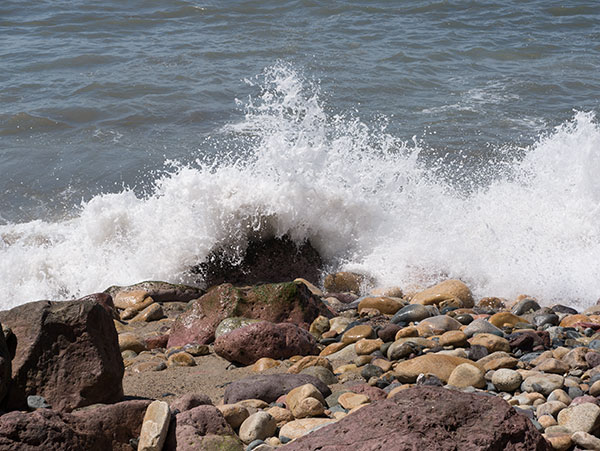 RAW image no processing all information as presented to the camera.
 Adjustments to RAW file to more tune the scene to as seen. Increased saturation,
adjusted WB, opened shadows, controlled highlights.
 Porcessed RAW file from above with vingette added.
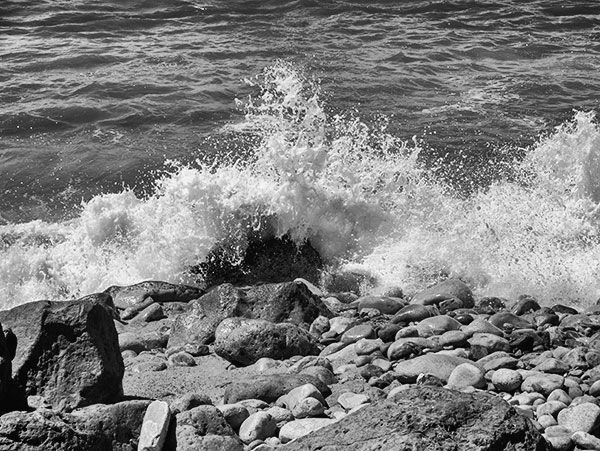 Above file converted to black and white using NIK Silver FX Pro PS. the NIK Collection is now
owned by Google. You can get the whole suite for only $149. If you own one of the NIK products
you can now claim the rest of the suite from Google at no charge.
REASONS to shoot JPEG
There are none according to my buddy Kevin Ames of http://www.amesphoto.com He says, “Friends don’t let friends shoot jpeg!!” In certain instances I have to argue a bit.
Many of the new cameras have creative settings built in. While I was never a fan in the past the fact that you can now tweak the settings of many of these setting to your own taste you can build a recipe of a look you like and it is completed in camera. If you don’t save these files as jpegs you get to view them on the back of your camera according to the recipe and for about 2 seconds after downloading because the RAW info is all you will have access to.
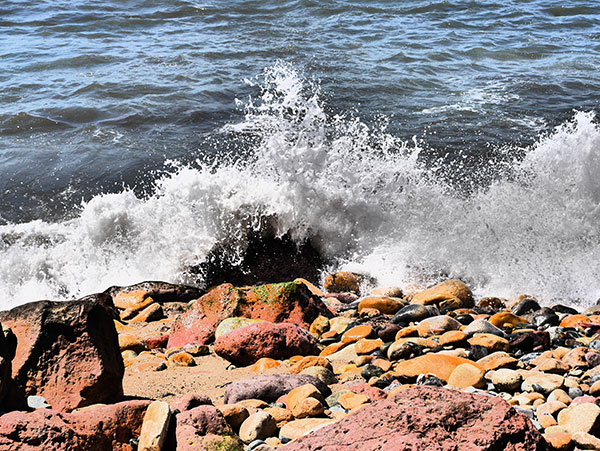 Captured by camera with the Impressive Art setting on the Lumix GX7
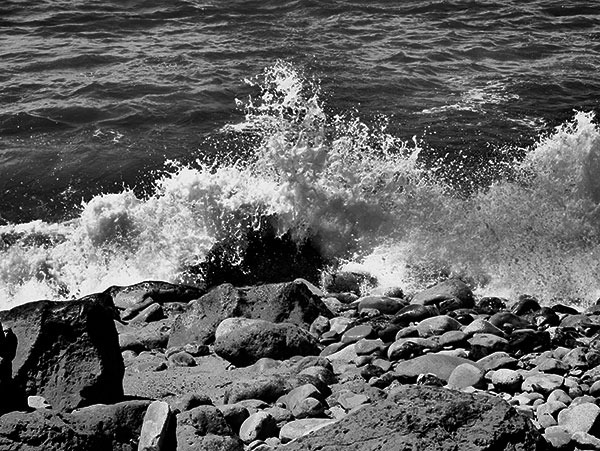 Above photo converted to black and white with a vingette added
Another jpeg scenario. If you have complete control of your lighting in a studio situation and are working on super tight deadlines jpeg can be a perfectly fine alternative. Jpeg is akin to shooting slide film back in the day. (you do remember film right?… if you are under 25 never mind) Jpeg files are processed in the camera and information is removed from the file based on in camera processing and can not be recovered. But if your exposure is correct and falls within the latitude of highlight and shadow you’ll be fine and can move files into the workflow of the job without spending time processing the files post haste.
REASONS to shoot RAW and JPEG
One reason to shoot RAW and Jpeg would be to keep the screams I can hear all the way from Atlanta from Kevin from making you crazy. The other is it makes good sense to keep your options open. This can be the best of both worlds. You can have the speed of the jpeg but the back up of the RAW info in case there is a malfunction during the shoot in the studio that you were unaware of like a color balance issue for example. It would be much quicker to reprocess the RAW files with the proper CB than to have to try and fix jpegs that were not quite right thereby throwing away even more information from the files (Wait did I just make Kevin’s argument for him? I hate it when he’s right)
The other reason is you want to have the camera presets work for you but then have the RAW info available to process the file to more exacting specifications or for different purposes.
FINAL THOUGHTS
As my buddy Kevin says, “Always shoot RAW!” I can go with that. Turns out it’s pretty cheap insurance if something goes wrong during a shoot or you want to ultimately use an image for a different purpose. You can shoot RAW plus Jpeg when you have a need of the jpeg output either because of using your camera presets or recipes to have a consistent look for your images or the need for speed in getting images to another location quickly and efficiently.
I’ve found the best of both worlds exists in today’s cameras. When in doubt the answer is to shoot both at the same time.
All images from this lesson were captured with my traveling camera the Panasonic Lumix GX7
Yous in Photography, Bob
by successfulbob | photography - art quote, success education
This is an awesome quote!
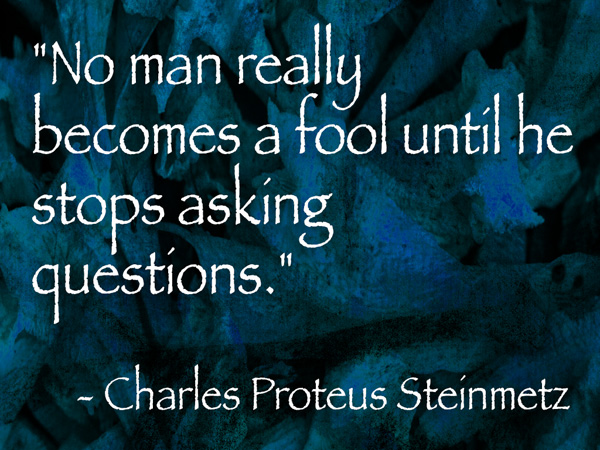 “No man becomes a fool until he stops asking questions.” Charles Proteus Steinmetz
Often I see tentativeness in people about asking questions because they might be thought the less of because they don’t already have that information. When I am giving seminars and presenting programs I will often get questions from attendees that are couched with this phrase, “This is probably a stupid question…” Please remember there are NO stupid questions. Only uninformed people who are afraid to ask.
What kind of questions help you in your photography business?
Obviously talking with other photographers asking about techniques can be helpful in adding to your bag of tricks and can be of help. But dig a little deeper.
Asking questions of your photographic subjects can unearth information that can help you tell their story better. With the proper question you can get an expression and inner light not usually apparent. Or better yet you might uncover a story you didn’t even know was there that could lead to a photo essay!
Asking questions of people when you are traveling can uncover some really cool photographic opportunities. Most people are proud of their town and happy to share interesting areas in their neighborhood.
Ask questions about business.
Be like a child. Stay curious. Don’t be embarrassed. Ask questions. You’ll be rewarded for it…
Your in Photography, Bob
PS The originator of today’s quote was Charles Proteus Steinmetz. He was a mathematician and electrical engineer. He fostered the development of alternating current that made possible the expansion of the electric power industry in the United States. Wikipedia